 how-to
How to Increase Congregational Singing: 7 Proven Steps
Table of Contents
- Why Congregations Stop Singing (And Why It Matters)
- Worship Song Selection Tips That Put the Congregation First
- Choosing Keys for Congregational Singing: A Practical Framework
- How to Lead Worship for Non-Singers Without Singing Anyone Out
- Balancing Volume, Instruments, and Sound Reinforcement
- Teaching New Music Without Losing the Room
- Building a Culture of Participation Beyond Sunday
- Frequently Asked Questions
Last Updated: September 23, 2026
Why Congregations Stop Singing (And Why It Matters)
Walk into most churches on a Sunday morning and you will hear it: a few strong voices up front, a room full of people watching instead of singing. Learning how to increase congregational singing starts with understanding why so many worshippers have gone quiet. This guide from Let Her Sing! pulls together practical steps for worship leaders, pastors, and music directors.
The reasons are rarely spiritual. They are practical, and often fixable.
The Psychological Barriers That Silence a Room
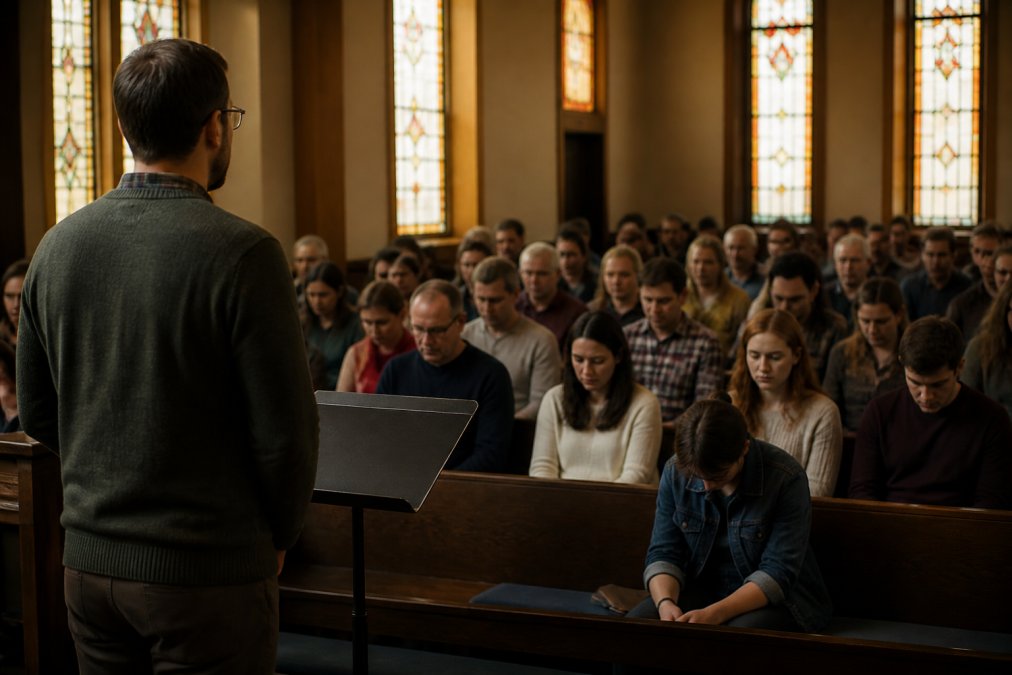
Most people who stop singing are not refusing to worship. They are afraid of being heard. Silence usually means discomfort, not disinterest: someone worries their voice is not good enough, cannot reach the high notes, or does not know the song.
These barriers build on each other:
- Fear of singing badly in front of neighbors
- Songs pitched too high for the average voice
- Lyrics projected too fast to follow
- No sense that anyone else is singing either
Fix the environment, and participation often follows.
Worship Song Selection Tips That Put the Congregation First
Song selection is the single biggest lever a worship leader controls. The best worship song selection tips come down to one question: can the average person in the room sing this well? Choose songs for the congregation, not the band. A song that sounds powerful on a recording can fall flat in a room of untrained voices. Look for stepwise melodies, repeating choruses, and ranges that stay within reach.
A few practical filters:
- Does the melody sit comfortably for most voices?
- Is the chorus easy to remember after one hearing?
- Does the song work with just a piano or guitar?
- Have we sung it recently enough that people know it?
Balance familiar hymns with newer songs: hymnody gives older members a shared language, while new songs keep the worship arts alive for younger attendees.
Choosing Keys for Congregational Singing: A Practical Framework
Choosing keys for congregational singing is where most worship teams lose the room without realizing it. The right key lets a room full of ordinary voices sing together comfortably.
Finding the Sweet Spot: Vocal Range and Key Signature
The average congregation sings best in a range of about an octave and a half, roughly from a low A to a middle D. Most recorded worship songs sit higher. When a song is pitched for a trained vocalist, the congregation drops out on the high notes and never comes back in. Test it yourself: sing the melody alone in the planned key. If you strain, the room will strain harder.
| Voice Type | Comfortable Range | Key Adjustment |
|---|---|---|
| Most congregational voices | A3 to D5 | Lower the key 1-2 steps |
| Male-led songs | G2 to D4 | Raise or capo up |
| Female-led songs | A3 to E5 | Lower the key if strained |
| Children and older adults | Narrower range | Choose simple, stepwise melodies |
A simple rule: if the melody sits above a D5 for more than a phrase, drop the key.
How to Lead Worship for Non-Singers Without Singing Anyone Out
Learning how to lead worship for non-singers means making participation feel safe, not mandatory. Model participation from the front: when the worship leader sings with visible joy and no performance pressure, the room relaxes. Use visual cues like a raised hand on the chorus, and keep the microphone on the leader, not the room.
Small choices matter:
- Welcome everyone to sing, but never demand it
- Avoid calling out individuals or sections
- Let instrumental moments give people a break
- Keep lyrics large, clear, and well-timed
Balancing Volume, Instruments, and Sound Reinforcement
Sound reinforcement can help or hurt participation. When the band is too loud, the congregation cannot hear itself sing, so people stop. But the problem is not just volume, the room is an instrument too. If it is too reverberant, voices blur and people feel exposed; if too dry, the congregation hears only its own weak voices and retreats. The goal is a mix where the room hears its own voices clearly and warmly.
Start by understanding your room's natural acoustics. A sanctuary with high ceilings and hard surfaces will have long reverb times, often 2 to 4 seconds, which sounds majestic for a choir but makes congregational singing muddy and intimidating. A room with carpet, pew cushions, and acoustic panels is drier, which can make voices sound thin. The sweet spot is usually a mid-range reverb time of around 1.2 to 1.8 seconds: long enough to blend voices, short enough to hear individual parts.
You can test this without equipment: stand in the middle of the room and clap once. A long, distinct echo means the room is too live; if the clap dies instantly, it is too dead. For a live room, add temporary dampening, heavy curtains, tapestries, or thick banners on side walls. For a dead room, remove some carpet or add reflective surfaces like wood panels behind the congregation. These low-cost changes directly affect how safe people feel singing.
Next, address the sound system. The congregation needs to hear itself, so the main speakers should not mask the room. Use the PA primarily for the lead vocal and instruments that need reinforcement, and keep the overall level low enough that you can hear the person next to you. During the first verse, the lead vocal should be clearly audible but not dominant. If you hear drums and electric guitar more than the room, pull them back.
Instrument-specific adjustments matter. Drums are the biggest culprit: a full kit in a small room will almost always overpower congregational singing, so consider a cajon, brushes, or a muted kit. If you must use a full kit, place it behind a clear acrylic shield and keep the cymbals low. Electric guitars should use less distortion and more mid-range cut; bass should be felt, not heard. Piano and acoustic guitar are the most congregation-friendly instruments because their frequencies sit in the same range as human voices.
Finally, train your sound operator to mix for participation, not performance.
- Can you hear the person next to you singing?
- Is the lead vocal louder than the room?
- Do the drums overpower the congregation?
- Is there audible feedback of the room's own voice?
Teaching New Music Without Losing the Room
New songs build a living repertoire, but they can silence a room if introduced poorly. Teach one new song at a time, before it matters.
Simple approach:
- Introduce the melody with a single instrument
- Sing it once alone so people hear it
- Invite the room to join on the chorus only
- Repeat it the following week
- Add it to regular rotation once it feels familiar
Building a Culture of Participation Beyond Sunday
Participation is a habit, and habits form outside the main service. But the biggest barrier to congregational singing is not musical, it is psychological. Many people do not sing because they are self-conscious about their voice, fear being heard, or feel they are not "good enough." Building a culture of participation means addressing those barriers head-on and creating spaces where every voice feels welcome, regardless of age or musical background.
- Seat the choir or worship team among the congregation, not apart. When people see others singing around them, they feel less conspicuous.
- Use a mix that blends the congregation's voices into the overall sound, so no single voice stands out.
- Avoid calling out individuals or sections. Never put a spotlight on someone who is not singing.
- Provide lyrics that are easy to follow, with clear phrasing and no rapid-fire text changes.
Frequently Asked Questions
What is the ideal vocal range for congregational singing?
Most congregations sing comfortably between A3 and D5, with the melody staying roughly between C4 and C5. When choosing keys, aim for the melody to sit in that middle range so neither men nor women strain. If the melody climbs above E5 or drops below A3, the congregation will drop out. Test each song's range before Sunday and adjust the key until the majority can sing without effort.
How can worship leaders encourage participation without being overbearing?
Model singing from the front with clear vocal technique and visible engagement, but avoid commanding the congregation to sing louder or show more energy. Instead, use visual cues like hand gestures to invite entry points, and choose songs with simple, repetitive melodies that build confidence. When you lead with warmth and humility, people join naturally rather than feeling pressured.
Why do congregations stop singing during worship services?
Common reasons include songs pitched too high or too low, unfamiliar melodies, lyrics projected without warning, and a performance-style stage setup that makes the congregation feel like an audience. Psychological barriers like fear of being heard or feeling unworthy also play a role. Addressing key suitability, song familiarity, and the visual message your stage sends can reverse the silence.
How does song selection impact congregational engagement?
Song selection directly determines whether people can participate. Choose songs with singable melodies, repeated choruses, and lyrics that reflect the congregation's shared theology. Mix familiar hymnody with new songs so there's always an anchor. Avoid clustering too many unfamiliar or rhythmically complex songs in one service, as that leaves the congregation watching rather than singing.