 How-to
How to Foster Inclusive Worship Experiences in Your Church
Last Updated: November 17, 2026
Quick Summary
Foster inclusive worship by putting belonging before performance, so everyone feels free to take part. Remove practical barriers, support neurodivergent and multilingual members, and help the whole congregation sing together.
- Greet newcomers by name and invite people to sing even if they feel unsure.
- Run a quarterly accessibility audit covering arrival, seating, participation, and digital access.
- Post a one-page service preview so neurodivergent families can prepare before Sunday.
- Print lyrics in every language your members speak and invite bilingual readers to lead.
- Choose songs with a comfortable range and let instruments support voices rather than overpower them.
Table of Contents
- Why Inclusive Worship Starts With Community, Not Performance
- Step 1: Build a Welcoming Culture Where Every Person Belongs
- Step 2: Make Accessible Church Worship Services a Practical Priority
- Step 3: Include Neurodiversity in Church Worship Planning
- Step 4: Use Multilingual Worship Service Practical Tips
- Step 5: Apply Ways to Encourage Congregational Singing
- Shifting From Performance-Based Music to Ministry-Based Music
- Begin With One Service: Your Next Step as a Worship Leader
- Frequently Asked Questions
Why Inclusive Worship Starts With Community, Not Performance
Inclusive worship begins with people, not polished performance. The heart of worship lies in community and collective musical engagement, where every voice matters. When a congregation sings together, the goal shifts from impressing listeners to belonging to one another.
Many churches build their music around the best voices on stage. The result often leaves the rest of the room quiet. Inclusive worship asks a different question: who is missing, and how can they take part?
- Every person has a place in the song
- Participation matters more than perfect execution
- Leaders serve the congregation, not the other way around
The church is the place for every person's music. That idea shapes everything that follows in this guide.
Step 1: Build a Welcoming Culture Where Every Person Belongs
A welcoming culture starts with how people feel when they walk through the door. Belonging comes first. Skill comes later.
Start with these habits:
- Greet newcomers by name whenever possible
- Invite people to sing even if they feel unsure
- Say out loud that off-key voices are welcome
- Thank people for participating, not for performing well
Leaders set the tone. When a pastor or worship leader models humility and openness, the congregation follows. Inclusive worship builds on this foundation of care.
Step 2: Make Accessible Church Worship Services a Practical Priority
Accessible church worship services remove barriers that keep people from taking part. Those barriers include physical access, sound, lighting, printed materials, language, and the digital doorway people use before they ever arrive.
Inclusion often fails not from a single big obstacle but from a chain of small ones: a step at the entrance, a lyric slide no one can read from the back, a livestream with no captions, a follow-up email that never comes. The fix is to walk the whole journey and fix the chain, not just one link.
A Step-by-Step Accessibility Audit for Worship Services
Run this audit once a quarter, and again before any major service change. Walk it as a visitor would, ideally with a disabled member beside you, and cover four stages.
1. Arrival and entry
- Is there a step-free route from parking or transit to the main door, and is it signed?
- Do the doors open easily, and is there someone stationed to help without being asked?
- Are restrooms, water, and the welcome desk reachable without stairs?
2. Seating and the room itself
- Are wheelchair spaces integrated with the congregation rather than pushed to the back or side?
- Can someone with limited mobility reach the front area, the communion table, and the exits?
- Is there a quiet space nearby for anyone who needs a break from noise or crowd?
- Is lighting adjustable, and are slides and bulletins readable from the last row?
3. Participation in the service
- Can people hear the lyrics and spoken words clearly, including those with hearing aids or processing differences?
- Are song words, prayers, and readings available in large print and on screen?
- Is there more than one way to take part, singing, listening, reading, moving, praying silently?
- Are microphones shared so that quieter voices and bilingual readers can be heard?
4. Follow-up and the digital journey
- Does the livestream have captions and a transcript, and can screen-reader users navigate the page?
- Can online attendees comment, request prayer, or ask a question in an accessible way?
- Does the welcome follow-up reach people who joined remotely, not only those in the room?
Write down what you find at each stage. Pick two or three fixes to start with, then schedule the rest across the year.
Watch out: an audit done only by staff and able-bodied volunteers will miss the barriers that matter most. Invite disabled congregants into the walk-through and into the decisions that follow, and credit their contribution openly.
Low-Cost Adaptations for Physical, Sensory, and Digital Access
Many helpful changes cost little or nothing, which matters for churches with limited resources:
- Clear a wheelchair path and reserve seats near the aisle, integrated with the rows
- Use larger print on slides and bulletins, and offer a printed song sheet for people who prefer reading to screens
- Lower the lights slightly during quiet moments and keep sudden lighting changes to a minimum
- Provide earplugs, a calm room, and soft seating for people sensitive to loud music
- Turn on auto-captions for the livestream and post a transcript afterward
- Publish the order of service online before the service so people can prepare
Small changes often make the biggest difference for people who feel overlooked. The point is not perfect facilities. It is responsible stewardship of the room and the doorway God has given you.
Gathering Feedback and Measuring Inclusion
Inclusion you cannot see is hard to improve. Build a simple feedback loop: a short quarterly survey (paper and online), a suggestion box near the welcome desk, and one conversation each month with a member who faces a barrier. Track a handful of plain measures, how many people use the quiet room, how many join online, how many report the lyrics were readable, and review them with your leadership team. Improvement is a direction, not a destination.
Step 3: Include Neurodiversity in Church Worship Planning
Neurodivergent people experience worship in many ways. Some find loud music overwhelming (Autism and sensory processing | Autism Space). Others struggle with long periods of standing, unpredictable transitions, or crowded rooms. Planning with these needs in mind helps everyone, and it turns a good intention into a workable Sunday.
Churches that do this well treat sensory support as part of the service design, not an add-on for a few families. Making worship accessible for neurodivergent people offers a dedicated guide to this subject. The goal is not a separate experience. It is the same worship with more ways in.
Concrete Sensory Supports to Build Into the Service
- A service preview. Post a simple one-page outline before Sunday: order of service, approximate times, where the loud moments are, and where the exits are. Families can read it together on Saturday.
- A quiet space. Set aside a room or corner with soft lighting and low noise, staffed by a calm volunteer, available before and during the service.
- Flexible seating and movement. Allow people to sit, stand, or move as they need, and say so out loud from the front so no one feels watched.
- Sensory tools. Keep a small basket of ear defenders, fidget items, and sunglasses near the welcome desk, offered without comment.
- Predictable transitions. Give a heads-up before loud music, sudden lighting changes, or a shift in the service, and keep the order of service stable week to week.
- A named point of contact. Designate one person who families can ask for help before they arrive, so the first Sunday is not a surprise.
These supports help neurodivergent members and also serve visitors, young families, and anyone having a hard day. That overlap is the point: inclusive worship is not a special track for a few. It is the whole congregation making room.
Co-Design With Neurodivergent Members, Not Just For Them
Churches can design inclusion for people rather than with them. Flip that. Invite neurodivergent members and their families into the planning conversation, share the decisions with them, and credit their contribution.
Watch out: a quiet room that is hard to find, unstaffed, or used for storage signals that the support was never real. Check it every week before the service starts, and let the congregation know where it is.
Ask neurodivergent members what helps them most, and keep asking as the service changes. Their answers will guide better planning than any general checklist, and they will tell you when a fix has stopped working.
Step 4: Use Multilingual Worship Service Practical Tips
Many congregations include people who speak more than one language. Including them well means more than translating a few words.
Consider these multilingual worship service practical tips:
- Print song lyrics in each language spoken by your members
- Invite a bilingual reader to lead a prayer or reading
- Display key phrases on screens in both languages
- Let people sing a verse in their first language when possible
These steps show respect and make the service feel like home for more people.
Step 5: Apply Ways to Encourage Congregational Singing
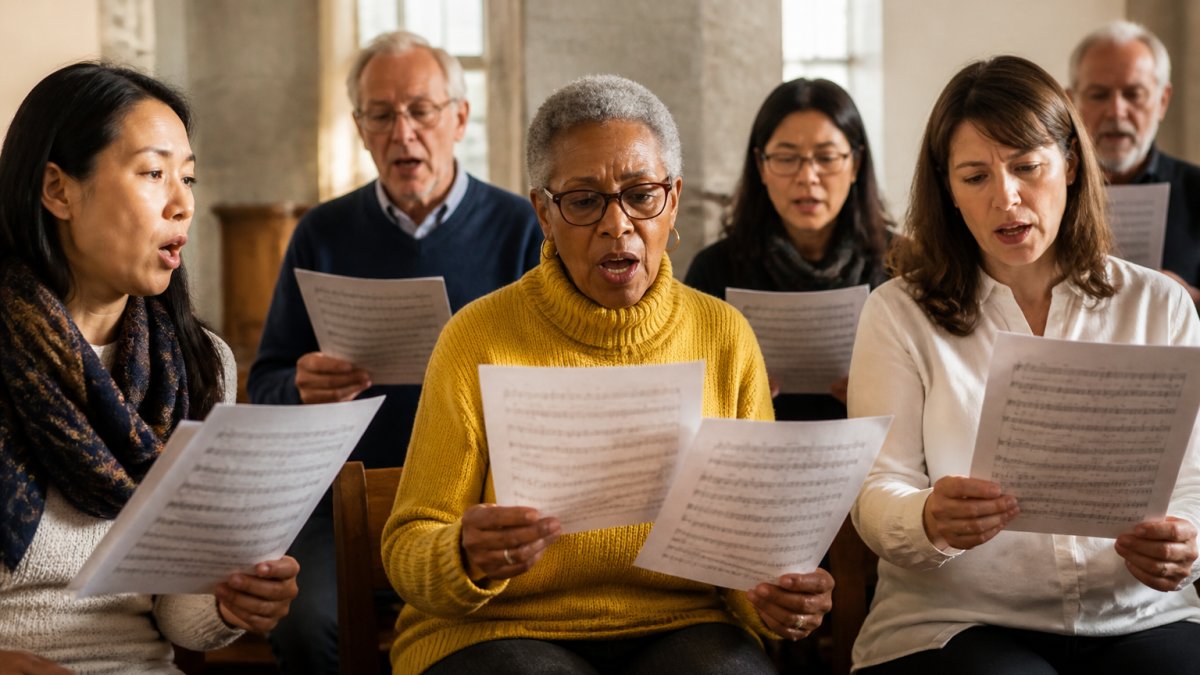
Encouraging congregational singing is at the center of inclusive worship. When everyone sings, the music belongs to the whole church.
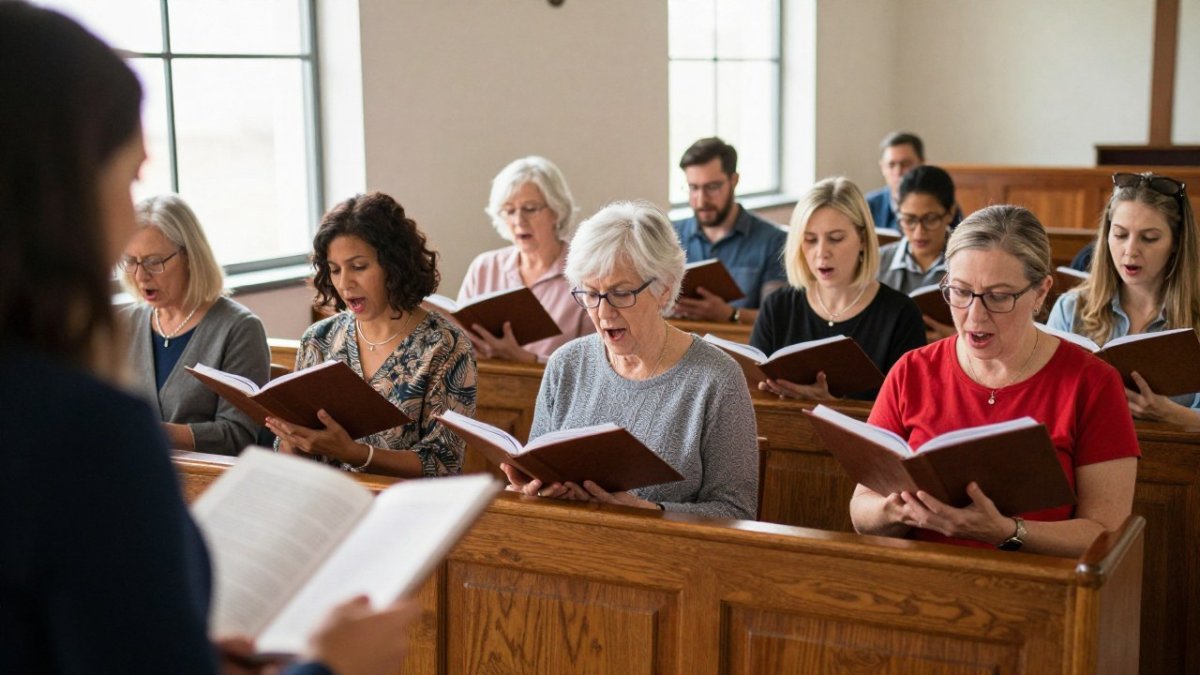
!A diverse group of congregants of different ages singing together from hymnals in a bright church sanctuary, with a worship leader in the foreground
Helpful approaches include:
- Choose songs with a comfortable range for average voices
- Teach new songs briefly before using them in worship
- Invite the congregation to sing the chorus while a small group leads verses
- Keep instruments supporting the voices rather than drowning them out
Let the congregation hear itself. That sound is part of the worship.
Helpful approaches to encouraging congregational singing are summarised below.
| Approach | Why it helps |
|---|---|
| Choose songs with a comfortable range | Fits average voices |
| Teach new songs briefly first | Prepares people to sing |
| Congregation sings chorus, small group leads verses | Shares the singing |
| Keep instruments supporting the voices | Lets the congregation hear itself |
Shifting From Performance-Based Music to Ministry-Based Music
Many churches measure music by how polished it sounds. Ministry-based music asks a different question: does this help people worship together?
Performance-based music often rests on a few skilled singers. Ministry-based music draws in the whole body of believers. It values service over display, and participation over perfection.
Leaders serve each other and the congregation, and they stay open to every person's gift. This does not mean lowering standards. It means letting God's grace guide how music serves the church.
Begin With One Service: Your Next Step as a Worship Leader
You do not need to change everything at once. Pick one service and apply one or two ideas from this guide. Ask a few members what they noticed. Listen carefully and adjust.
Responsible stewardship means caring for each voice, one service at a time. Show me how your church can begin.
Frequently Asked Questions
How do you foster an inclusive environment in a church?
Start by listening. Ask members with disabilities, older adults, younger people, and non-native speakers what would make worship easier for them to join. Then act on what you hear, beginning with changes that cost little: clear printed lyrics in large type, a greeter trained to offer help, and music choices that fit a range of vocal ranges. Inclusion grows when leaders model it consistently, from the pulpit and the worship team alike, and when people see their suggestions turn into visible changes over time.
What are practical ways to make a worship service more accessible?
Walk through your service as a first-time visitor who uses a wheelchair, has low vision, or is hard of hearing. Check entrances, seating, and sightlines. Offer large-print and digital bulletins, captioning or a hearing loop where possible, and quiet seating options for people sensitive to sound. Because accessible church worship services depend on local needs, invite feedback regularly and adjust the plan rather than assuming one fix works everywhere.
How can churches include neurodivergent people in worship?
Give advance notice of what will happen, including order of service, music volume, and any moments of silence or movement. Offer a sensory-friendly space or seating near an exit, and allow people to participate in ways that suit them, such as listening, reading, or moving rather than singing aloud. Neurodiversity in church worship is strengthened when leaders ask neurodivergent members directly what helps, and when those answers shape the plan.
How can worship leaders encourage more people to sing?
Choose songs with a comfortable range and simple melodies, and introduce new music with a few repetitions before a full congregational launch. Let the congregation hear a strong, welcoming lead voice rather than a performance that feels out of reach. Print lyrics clearly, invite singing as an act of community rather than a test of skill, and celebrate participation from every age group so that people feel their voice is needed.