 How-to
How to Plan a Multilingual Worship Service
Quick Summary
To plan a multilingual worship service, first survey which languages your congregation thinks and prays in, then translate the welcome, song lyrics, scripture readings, prayers, and announcements. Arrange interpreters and equipment, choose songs people can sing together, and follow a weekly planning workflow.
- Ask members which language they think in, pray in, and want for singing.
- Translate the welcome, song lyrics, readings, prayers, and announcements first.
- Name a backup interpreter for each language and keep their contact details handy.
- Have a native speaker check every translated lyric before it goes on the screen.
- Hold a two-minute huddle before the service to catch last-minute changes.
Table of Contents
- Why Multilingual Worship Belongs in Your Church
- Step 1: Survey Your Congregation's Language Needs
- Step 2: Choose Which Languages and Elements to Translate
- Step 3: Arrange Interpretation and Translation Logistics
- Step 4: Select Multilingual Worship Songs Everyone Can Sing
- Step 5: Build a Week-by-Week Service Planning Workflow
- Step 6: Evaluate Participation and Plan Your Next Service
- Start Your First Multilingual Service This Month
- Frequently Asked Questions
How to Plan a Multilingual Worship Service
Last Updated: November 12, 2026
Why Multilingual Worship Belongs in Your Church
Many churches have members who think and pray in more than one language. When the service runs in only one of them, some people sit quietly while others sing. A multilingual worship service changes that.
A multilingual worship service is a gathering where songs, prayers, readings, and announcements are shared in more than one language so that each person can understand and take part. It does not require a perfect translation of everything.
Here is what this guide covers:
- How to find out which languages your congregation actually uses
- How to decide what to translate and what to leave alone
- How to arrange interpreters, screens, and equipment
- How to choose songs that people can sing together
- A simple weekly workflow for your planning team
- How to check whether people are really taking part
Let go of the idea that everything must be perfect on the first try. Start small, listen closely, and improve each week. Responsible stewardship matters more than polished production.
Step 1: Survey Your Congregation's Language Needs
Before you plan anything, find out who is in the room. Guessing often leads to translating the wrong things or missing a group entirely.
How to run a simple survey:
- Ask on a sign-up card, a church app, or a short paper form at the door, and use this broader guide to worship planning for diverse congregations to shape the rest of your planning.
- Include three questions: What language do you think in? Which language do you pray in? Which language would help you join the singing?
- Invite people to answer anonymously if they prefer
- Ask small group and children's leaders for their observations too
What to look for:
- The main language used at home for each household
- Whether older members prefer one language and younger members another
- Families who speak a language at home but use English at school or work
Write the results in a simple table so your team can see the numbers at a glance.
| Language | Households | Age group most common | Used for prayer? |
|---|---|---|---|
| English | |||
| Spanish | |||
| (add others) |
Revisit this survey once a year. Congregations change, and new families often bring new languages.
Step 2: Choose Which Languages and Elements to Translate
You will not be able to translate everything into every language. Pick the parts of the service that matter most for understanding and participation.
Start with these priorities:
- Welcome and greeting: the first words people hear set the tone
- Song lyrics: people can sing along only if they understand the words
- Scripture readings: many people want to follow the text in their own language
- Prayers and the Lord's Prayer: these are often memorized in a first language
- Announcements: practical details prevent confusion and make people feel included
Elements that can often wait:
- Long sermons, which work best with an interpreter
- Background music and transitions
- Written bulletin content beyond the essentials
A practical rule: If a person would feel lost or left out without a piece, translate it. If they would only miss a nice extra, you can skip it.
Keep a shared document listing each element, the language it is offered in, and who is responsible for it.
Step 3: Arrange Interpretation and Translation Logistics
Once you know which elements to translate, decide how people will receive them.
Consecutive interpretation means the speaker pauses after a sentence or two while the interpreter repeats the message in another language. It roughly doubles the spoken length of the sermon or prayer.
Simultaneous interpretation means the interpreter speaks at the same time as the speaker, usually into a headset system.
Delivery methods to consider:
- Headsets and receivers: the most common approach for simultaneous interpretation. Rent or borrow a system sized to your language groups, test battery life, and assign one volunteer to hand out and collect units.
- Captions or projected text: useful for songs, readings, and responses, and helpful for people who read better than they hear. Keep lines short and use a second screen or lower third so the main text stays visible.
- Remote interpretation: an interpreter joins by video call and their audio is routed to headsets or a listening app. This can widen your pool of interpreters, but test the connection and have a phone backup.
- Printed worship aids: a simple folded sheet with the Lord's Prayer, responses, and song lyrics in each language. Low-tech, reliable, and good for visitors and for people who prefer paper.
Logistics checklist:
- Book interpreters early and confirm them the week before
- Brief interpreters on the service order, names, and any unusual words
- Test headsets, receivers, and screens before the congregation arrives
- Assign one volunteer to manage the equipment during the service
- Decide where interpreters will sit so they can see the leaders and the screen
- Print a backup copy of the sermon outline and key prayers for each interpreter
Watch out: if you rely on a single interpreter with no backup, a last-minute absence can leave a language group stranded.
Teams often forget the interpreters' needs. Give them water, a clear view of the stage, and a copy of the sermon outline.
Step 4: Select Multilingual Worship Songs Everyone Can Sing
Song choice is where many multilingual services succeed or struggle. People sing when they know the tune and the words, so choose with care.
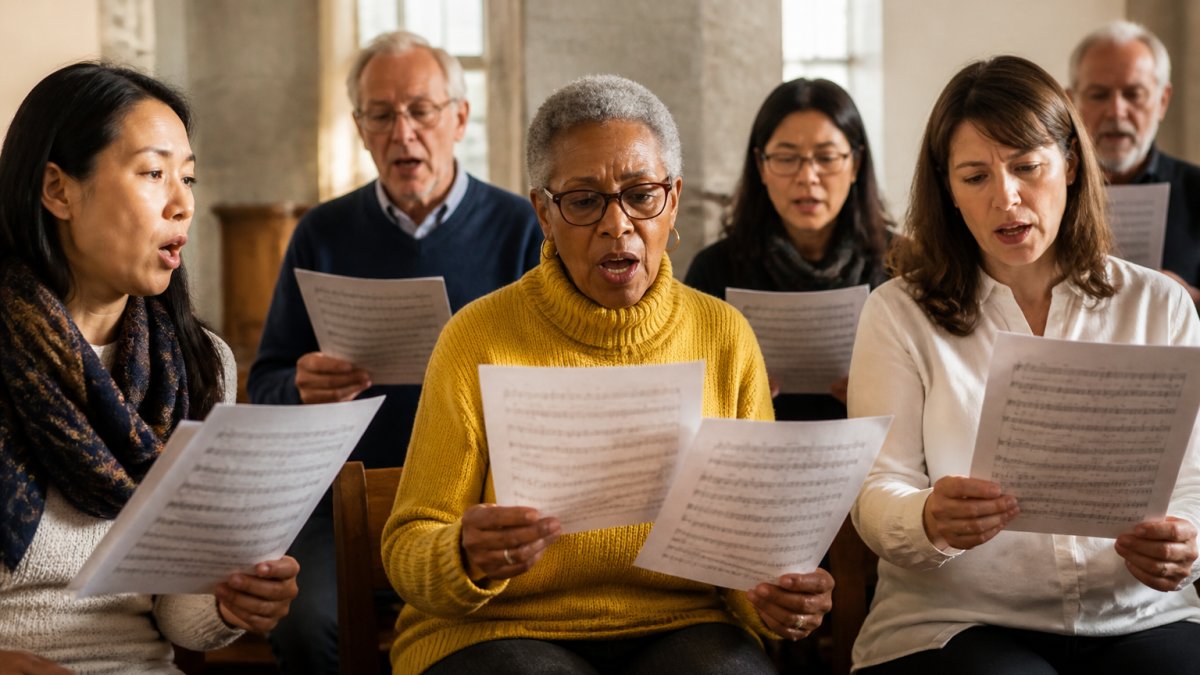
Ways to build a shared repertoire:
- Pick songs that already exist in more than one language
- Sing a verse in one language and the chorus in another, if the melody allows it
- Use short, repeated refrains that are easy to learn by ear
- Project lyrics in each language, one line above the other, if space allows
Tips for introducing a new song:
- Teach it in a small group first, such as a Bible study or youth group
- Give a one-sentence introduction in each language before the song begins
- Sing it slowly the first week, then at normal speed after people know it
Watch for these common mistakes:
- Choosing songs only the worship team knows well
- Asking the congregation to learn two new songs in the same week
- Using a translation that changes the meaning of the original
Ask a native speaker from your congregation to check every translated lyric before it goes on the screen.
Step 5: Build a Week-by-Week Service Planning Workflow
A clear weekly routine keeps multilingual planning from falling apart. Assign each task to a named person and set a deadline. The workflow below is a common pattern in congregations that run multilingual services regularly; adjust the days to fit your staff and volunteer availability.
Roles to name before the week begins:
- Service coordinator: owns the master document and confirms each step is done
- Translation lead: collects and checks translated texts from native speakers
- Interpreter liaison: confirms interpreters, sends outlines, and handles backups
- Tech volunteer: tests headsets, screens, and audio, and manages equipment on Sunday
- Feedback contact: gathers short comments from each language group after the service
A sample weekly rhythm:
- Monday: Review last week's notes and the participation feedback. The coordinator updates the master document with any changes.
- Tuesday: Send the sermon outline and song list to interpreters and translators. Confirm who is available and who is the backup.
- Wednesday: Confirm translated lyrics and slides are ready. The translation lead checks that a native speaker has reviewed each text.
- Thursday: Final check of announcements, bulletin, and screen text. The tech volunteer confirms equipment is charged and working.
- Friday: Walk through the service order with the team and test equipment. The interpreter liaison shares the final outline and any unusual names or terms.
- Sunday, before the service: Run a short sound and screen check with interpreters. Hand out headsets and printed aids.
Tools that help:
- A shared calendar for interpreter and team availability
- A single document holding the service order, song list, and translations
- A group chat or messaging channel for last-minute changes
- A simple checklist that the coordinator signs off each week
Contingency planning:
- Name a backup interpreter for each language and keep their contact information in the service folder
- Keep printed copies of key prayers and songs on hand in case screens or audio fail
- Decide in advance what to do if the screen or audio fails: who announces the change, and which printed aid people should pick up
- If a translation is unclear or arrives late, the coordinator decides whether to use it or fall back to the printed aid
Watch out: last-minute language changes are a common failure point. If a speaker adds a new announcement or changes the sermon text on Sunday morning, the interpreter may not have the words ready. Build a two-minute huddle before the service where the speaker confirms any changes with the interpreter liaison.
Step 6: Evaluate Participation and Plan Your Next Service
Finishing a service is not the end of the job. Check whether people actually joined in, then adjust.
Simple ways to measure participation:
- Ask two or three people from each language group for honest feedback after the service
- Count how many people sing the translated chorus by the third week
- Note which songs get the strongest response and which fall flat
- Ask interpreters what they heard from people sitting near them
Questions to ask your team:
- Did each language group feel included during the welcome and prayers? Use these concrete steps for increasing congregational singing to measure your results against.
- Which element caused confusion or delay?
- What is one thing to change next week?
Write down the answers and bring them to your next planning meeting. Small, steady changes will do more good than a big overhaul.
Start Your First Multilingual Service This Month
You do not need a full program in place to begin. Choose one language beyond your main one, translate the welcome and one song, and invite feedback. Let Her Sing! exists to help every voice find its place in the church, and a single well-prepared service can open that door. Show Me how the first step looks in your own congregation.
Frequently Asked Questions
How do you plan a multilingual worship service?
Start by surveying which languages people in your congregation speak and how comfortable they are with each one. Then decide which parts of the service will be in more than one language, such as the welcome, prayers, announcements, and a few songs, and which will stay in a shared language. Assign one person to own translation and interpretation, set a planning timeline of at least three weeks, and run a short rehearsal with the people who will lead in each language before the service.
How can churches include people who speak different languages in worship?
Print or project a short bilingual order of service so people can follow along, and repeat key phrases such as the call to worship and the benediction in each language. Introduce songs in the language they are sung in so people know what to expect. Where a full sermon translation is not practical, offer interpretation by a trained volunteer through headsets or a second microphone, and invite members who speak each language to lead a portion of the service.
What songs work well in a multilingual church service?
Songs with a refrain that repeats, simple melodies, and lyrics that can be learned quickly tend to work best. Choose songs that already exist in more than one language so the whole congregation can sing the same tune in their own words. Project lyrics in each language, introduce the song briefly, and sing the chorus first before adding verses. Ask a bilingual member to check that translated lyrics preserve the meaning of the original.
Should a multilingual church use interpretation or multiple languages in the service?
Most churches use a mix of both. Shared elements like singing and prayers can be done in several languages at once, while sermons and longer teaching often work better with simultaneous interpretation through headsets or a live interpreter. Decide based on how many languages you serve, how many people speak each one, and how much volunteer capacity you have. Review the choice every few months and adjust based on attendance and feedback.