 ultimate-guide
Worship Music for Diverse Congregations: A 2026 Guide
Table of Contents
- Why Worship Music for Diverse Congregations Matters
- Intergenerational Worship Song Selection That Works
- Multilingual Worship Service Practical Tips
- The Role of Lyrics in Theological Formation
- Practical Tips for Congregational Singing
- Accessibility and Neurodiversity in Worship
- Technical Implementation for Small vs. Large Teams
- Conclusion
- Frequently Asked Questions
Last Updated: September 25, 2026
Why Worship Music for Diverse Congregations Matters
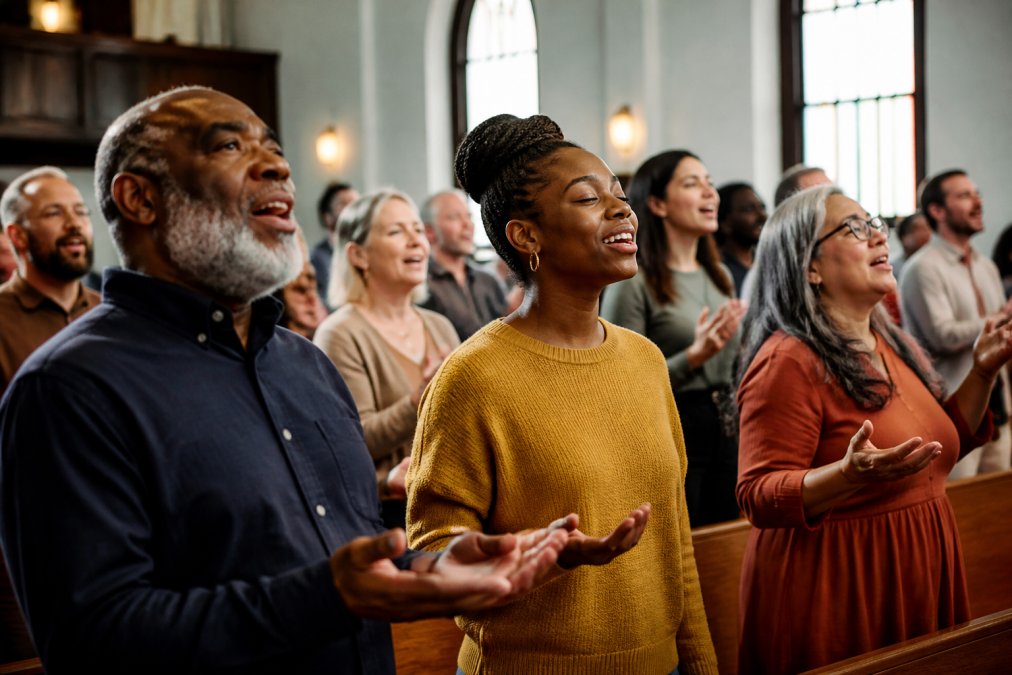
A church that sings together stays together, the conviction driving everything Let Her Sing! advocates, and why worship music for diverse congregations is a central question for worship leaders in 2026. Congregations span generations, languages, and abilities as never before, and the song list is where that diversity flourishes or fractures.
Theological Foundations of Corporate Worship
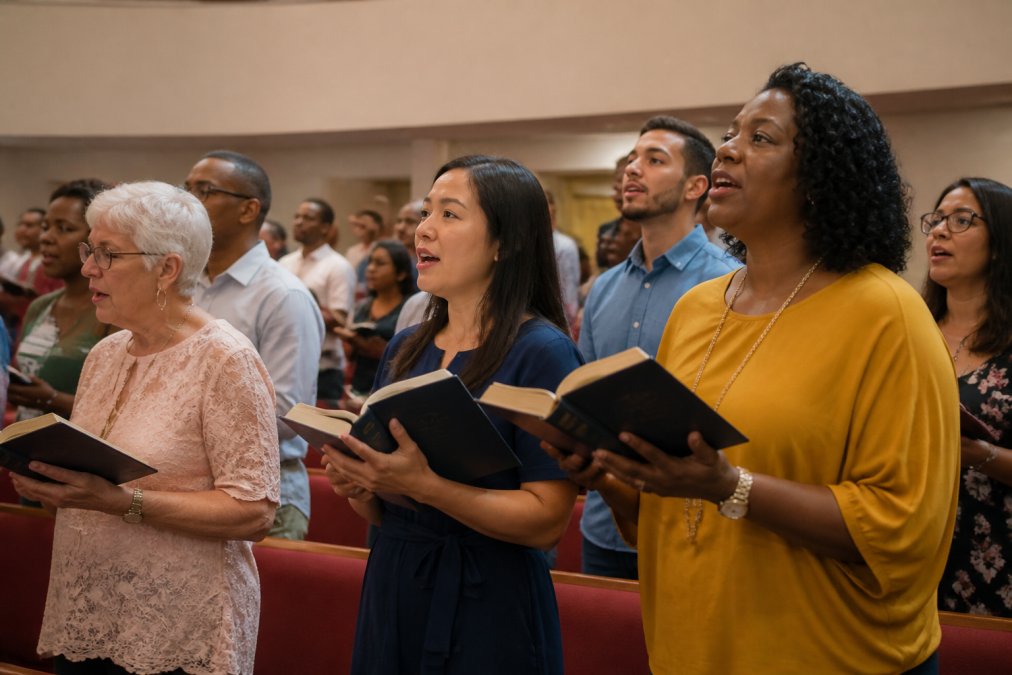
Corporate worship is the collective act of a gathered community directing praise to God, not a performance delivered by a few to an audience of many. That distinction shapes every decision a worship leader makes about repertoire and arrangement.
Intergenerational Worship Song Selection That Works
The most effective intergenerational worship song selection balances familiarity with freshness. A common approach is the "three-stream" model: one hymn or historic song, one current congregational song, and one simpler chorus anyone can join on first hearing.
Balancing Hymns and Contemporary Praise
Balancing hymns and contemporary praise is about intent, not a 50/50 split. Hymnody carries centuries-tested lyrical and theological depth; contemporary praise offers immediacy and emotional accessibility.
Adapting Keys for Vocal Accessibility
Vocal accessibility means choosing key signatures and melodic ranges the average person in the pew can actually sing. Most congregational melodies sit comfortably between middle C and the D an octave above; keys beyond that range exclude a large share of the room.
Multilingual Worship Service Practical Tips
Multilingual worship service practical tips start with song selection, because not every song survives translation. The most reliable candidates have short, declarative phrases, a repeating chorus, and a narrow melodic range. "How Great Thou Art," "10,000 Reasons," and "Way Maker" have all been translated into dozens of languages and are widely recognized across Spanish, Korean, Tagalog, and Swahili-speaking congregations.
A workable service structure looks like this:
- Opening song in the majority language to anchor the room.
- Second song with one verse in each represented language, then everyone joins on the chorus.
- A spoken bridge where a member of each language community briefly introduces the next song in their own language.
- Closing song in a shared language so the congregation leaves with a unified refrain.
Strategies for Multicultural Worship Integration
Strategies for multicultural worship integration work best when gradual and intentional. Introducing one new language or musical tradition per month gives the congregation time to absorb it without feeling displaced. A four-week cycle: week one, introduce the song in its original language; week two, sing it with a translation; week three, pair it with a related hymn or contemporary song; week four, let it stand alone as a familiar part of the rotation.
The Role of Lyrics in Theological Formation
Lyrics do more theological work than sermons in most churches, because people repeat them far more often. What a congregation sings shapes what it believes, so lyrical depth deserves the same scrutiny as doctrinal statements.
Practical Tips for Congregational Singing
Congregational singing improves when leaders stop treating it as background music. A few habits make an outsized difference:
- Teach new songs before the service, not during it
- Keep the tempo steady and avoid dramatic rubato that leaves people guessing
- Use a clear, audible lead vocal so the congregation has something to follow
- Limit new material to one song per service
- Let silence and space exist between phrases so people can breathe
Accessibility and Neurodiversity in Worship
Inclusive worship means designing for people usually treated as an afterthought: worshippers who are deaf or hard of hearing, autistic worshippers, and those with sensory sensitivities. Practical accommodations include captioned or projected lyrics in large, high-contrast type, reduced stage volume, and consistent lighting without sudden strobes.
Feedback Loops and Congregational Surveys
The only reliable way to know whether worship music is working is to ask. A short survey once or twice a year, covering song familiarity, volume, and language accessibility, surfaces problems leaders cannot see from the stage.
Technical Implementation for Small vs. Large Teams
Most worship articles treat diversity as theological or musical. In practice, the biggest barrier for small churches is technical: limited musicians, gear, and rehearsal time. This section is a playbook for making a diverse repertoire work with the team you actually have.
Small Teams (1-4 People)
A small team's advantage is flexibility; its disadvantage is that every song must be playable by the people in the room. The rule: simplify the arrangement, not the song list.
- Lead with one strong vocal and one chordal instrument. A single piano or acoustic guitar can carry a service if the key is right and the vocalist is confident. Do not replicate a full-band arrangement with a three-piece team.
- Use a chord chart, not a full score. Sites like WorshipTogether and PraiseCharts offer chord charts in multiple keys. Pick the key that fits your congregation's range, not the key on the original recording.
- Consider accompaniment tracks for unfamiliar songs. Tracks from providers like Multitracks or Loop Community can introduce a multilingual or historically Black church song your team cannot yet play live. Use them sparingly, no more than one per service, so the congregation still hears live voices.
- Rehearse the transitions, not just the songs. The moment between a hymn and a contemporary chorus is where diversity either feels seamless or jarring. Practice the key change and the spoken bridge.
Mid-Size Teams (5-10 People)
The challenge shifts from capability to balance: with more instruments, the band can overpower the congregation.
- Cap stage volume. If the congregation cannot hear themselves sing, they will stop. Set a decibel ceiling and sound-check with a recording of the room from the back row.
- Assign one instrument to carry the melody. A keyboard, violin, or flute can double the vocal line and give the congregation a pitch anchor. Avoid having every instrument play every note.
- Use in-ear monitors only if the team can still hear the room. In-ear monitoring can improve blend but can isolate the band from the congregation. If you use them, leave one ear open or mic the room into the mix.
Large Teams (10+ People)
A large team can handle complex arrangements, but the goal is participation, not complexity.
- Mix for the congregation, not the stage. The front-of-house mix should prioritize the lead vocal and the congregation's own sound. If the band is louder than the room, the room stops singing.
- Use dynamic arrangements. Not every song needs every instrument. Strip the band back on a hymn verse, then bring in the full team on the final chorus. This creates space for the congregation to hear themselves.
- Designate a worship leader whose only job is to lead the congregation. In large teams, the front person easily becomes a performer. Their role is to cue the congregation, not to impress them.
| Team Size | Main Challenge | Practical Fix | Priority |
|---|---|---|---|
| 1-4 people | Limited instrumentation | Simplify arrangements, lead with one strong vocal, use tracks sparingly | Singability |
| 5-10 people | Balancing instruments | Cap stage volume, assign one instrument to carry melody | Clarity |
| 10+ people | Overpowering the room | Mix for the congregation, use dynamic arrangements | Participation |
A Note on Gear and Budget
You do not need expensive gear for a diverse repertoire. A keyboard with a transpose function, a reliable microphone, and a projection system that displays multiple languages cover most needs. Without projection, printed lyric sheets in a bulletin work fine, the goal is that everyone sees the words in their own language.
Conclusion
The hardest part of building worship music for diverse congregations is not finding songs. It is the patience to test, transpose, and translate them, then ask the congregation whether they work, a willingness to let participation outrank preference.
Frequently Asked Questions
How do you choose worship songs that appeal to multiple generations?
Start by building a rotation that includes hymnody, contemporary praise, and praise choruses from different eras. Survey your congregation to learn which songs carry meaning across age groups. Look for arrangements that work for both traditional and modern instrumentation. Songs with strong lyrical depth and simple, repeatable melodies tend to bridge generations well. Aim for a worship set that gives every demographic at least one song they recognize and can sing confidently.
What are the best practices for incorporating multicultural music in worship?
Begin by learning the cultural context behind each song rather than treating it as decoration. Invite members from different cultural backgrounds to teach pronunciation, rhythm, and meaning. Use multilingual worship service practical tips like projecting lyrics in two languages side by side and choosing songs with simple, repetitive phrases that non-native speakers can follow. Partner with musicians from those communities when possible, and rotate multicultural selections regularly instead of saving them for special occasions.
How can worship leaders foster inclusivity through song selection?
Inclusive song selection means considering vocal range, language accessibility, cognitive load, and physical ability. Choose keys that sit comfortably for untrained voices, not just trained singers. Avoid rapid lyric changes that exclude people with reading difficulties or neurodivergent members. Include songs with call-and-response patterns that don't require literacy. When planning worship sets, ask whether someone with hearing loss, autism, or limited English proficiency could participate meaningfully. If not, adjust the arrangement or add visual support.
How do you balance traditional and contemporary music in a diverse church?
Treat balance as a moving target, not a fixed ratio. Some weeks lean toward hymnody, others toward contemporary praise, depending on the liturgical season and congregation needs. Use a planning grid that tracks which styles appeared over the past month so no group feels consistently overlooked. Pair a hymn with a modern arrangement of the same text, or follow a contemporary song with a traditional response. The goal isn't equal time; it's ensuring every voice in the congregation finds a moment to sing something that feels like theirs.