 How-to
How to Integrate Choir and Congregation: A Practical Guide
Table of Contents
- Why Integrating Choir and Congregation Matters
- How to Encourage Congregational Singing from the Start
- Congregational Singing Ideas That Work in Real Worship
- Church Choir Team Building for Integration Success
- Preparing Choir-Led Worship Songs for Congregational Participation
- Positioning and Leading: Practical Steps for Sunday Worship
- Building Inclusive Participation Across All Voices
- Measuring and Sustaining Integration Over Time
- Frequently Asked Questions
Last Updated: October 11, 2026
Why Integrating Choir and Congregation Matters
The heart of worship is found in community. When a choir sings alone on stage and the congregation watches from the pews, something essential is missing. But understanding how to integrate choir and congregation transforms worship. When they sing together, something shifts.
This is what Let Her Sing! is about. We believe every voice matters in the life of the church. Not perfect voices. Not trained voices. Every voice. And the church that makes space for all of them, that's the church where real community happens.
Integrating choir and congregation isn't about performance. It's about belonging. When people sing together, they connect to each other and to something larger than themselves. The research supports this. Community-based worship strengthens faith, builds deeper relationships, and creates a sense of purpose.
Many churches struggle with how to integrate choir and congregation because they approach it backwards. They think about the music first.
How to Encourage Congregational Singing from the Start
The biggest mistake churches make is assuming people will sing if you just ask them to. They won't. Not without permission. Not without feeling safe.
Start by creating an explicit invitation. Before the song begins, name what's happening. Say something like: "This next song is for all of us. Whether you know it or not, sing what you can. Your voice matters here." That simple statement changes the room.
Then choose your first songs carefully. Familiar hymns work best. "Amazing Grace," "Jesus Loves Me," "How Great Thou Art", songs people already know in their bones. When people can sing without reading, they can focus on the experience instead of the mechanics. They relax.
Build momentum gradually. Don't ask the congregation to sing a brand-new piece on their first try. Start with one verse of something known. Add a chorus they can join. Let them taste what it feels like to sing together.
Congregational Singing Ideas That Work in Real Worship
Choosing Familiar and Learnable Songs
Familiar songs are your foundation. These are the pieces that don't require anyone to read music or learn new melodies. They're the songs people grew up with, the ones that live in memory rather than on a page.
But familiar isn't enough by itself. The song also needs to be singable. That means a reasonable range, not so high that people strain, not so low that the melody disappears. A good congregational song sits comfortably in the middle of most voices.
Learnable songs come next. These are pieces that might be new, but the melody is straightforward. It repeats. It's memorable. After hearing it once, people can join on the second verse. Hymn writers understood this. Modern worship writers sometimes forget it.
Create a rotation. Use familiar songs every week. Add one learnable song per month. Let people build confidence before you ask them to stretch further.
Creating Space for the Congregation to Lead
The congregation doesn't just follow the choir. Sometimes they lead.
This happens in call-and-response songs. The choir sings a line. The congregation responds. It's simple. It's participatory. It gives people a clear role.
It also happens when you give the congregation the main melody while the choir sings harmony underneath. This reverses the usual setup. Now the people in the pews are carrying the song. The choir supports them. This single shift, who sings the melody, transforms how people experience their own participation.
Another approach: designate certain verses for the congregation alone. The choir sits down. The people sing. They hear themselves. They feel their own power. Then the choir joins for the final verse, adding richness. But that moment of congregational-only singing? That's where people discover they can do this.
Church Choir Team Building for Integration Success
Integration doesn't happen by accident. It requires intentional leadership and a choir that understands the mission.
Your choir needs to know they're not performing for the congregation. They're leading the congregation. That's a different job. A performing choir tries to be impressive. A leading choir tries to make space for others to join.
This requires training. Help your choir understand the difference. Show them what happens when they sing too loudly, the congregation withdraws.
Build team culture around this mission. Make it clear that the goal is congregational participation, not choral excellence. Excellence matters, but only as a tool for inviting others in, not as an end in itself.
Create feedback loops. After worship, ask your choir: Did people sing? Did the integration feel natural? What would help more people join next time? This conversation keeps the focus on the actual outcome, not just the performance.
Preparing Choir-Led Worship Songs for Congregational Participation
Arranging Music So Everyone Can Sing
The arrangement is everything. A beautiful choral arrangement that requires four-part harmony won't work for congregational singing. You need something simpler.
Start with the melody. Make sure it's clear, singable, and in a comfortable range. The melody should be the strongest line. Everything else supports it.
Then add harmony, but keep it simple. A single harmony part underneath the melody works. Two parts maximum. More than that, and the arrangement becomes too complex for people singing without music.
Consider adding descants, a higher line that sits above the main melody. This gives singers options. Some people sing the melody. Others sing the descant. Both work together. It creates richness without requiring everyone to read music.
Leave space for the congregation to breathe. Don't pack every beat with sound. Let there be moments where only the people sing, where the choir pulls back.
Rehearsal Techniques for Choir and Congregation Coordination
Rehearsal is where integration actually happens. This is where your choir learns to listen, to blend, to support rather than dominate.
Teach your choir to sing at about 70% volume in rehearsal. This trains them for the actual sound they need in worship. When they sing full volume in rehearsal, they'll sing too loudly on Sunday, and the congregation will disappear.
Practice with the melody line sung by non-choir members. Have a few people from the congregation come to rehearsal and sing the melody while the choir sings harmony.
Use call-and-response drills. The choir sings a phrase. Everyone responds. This builds the muscle memory of listening and responding together. It's the foundation of congregational leadership.
Record rehearsals and listen back. Ask: Can you hear the melody clearly? Does the choir sound like it's inviting people in, or does it sound like it's showing off? These recordings are powerful teaching tools.
Positioning and Leading: Practical Steps for Sunday Worship
The way your choir is positioned shapes how the congregation responds. If the choir is high on a stage, separated from the people, the message is clear: you're separate from us.
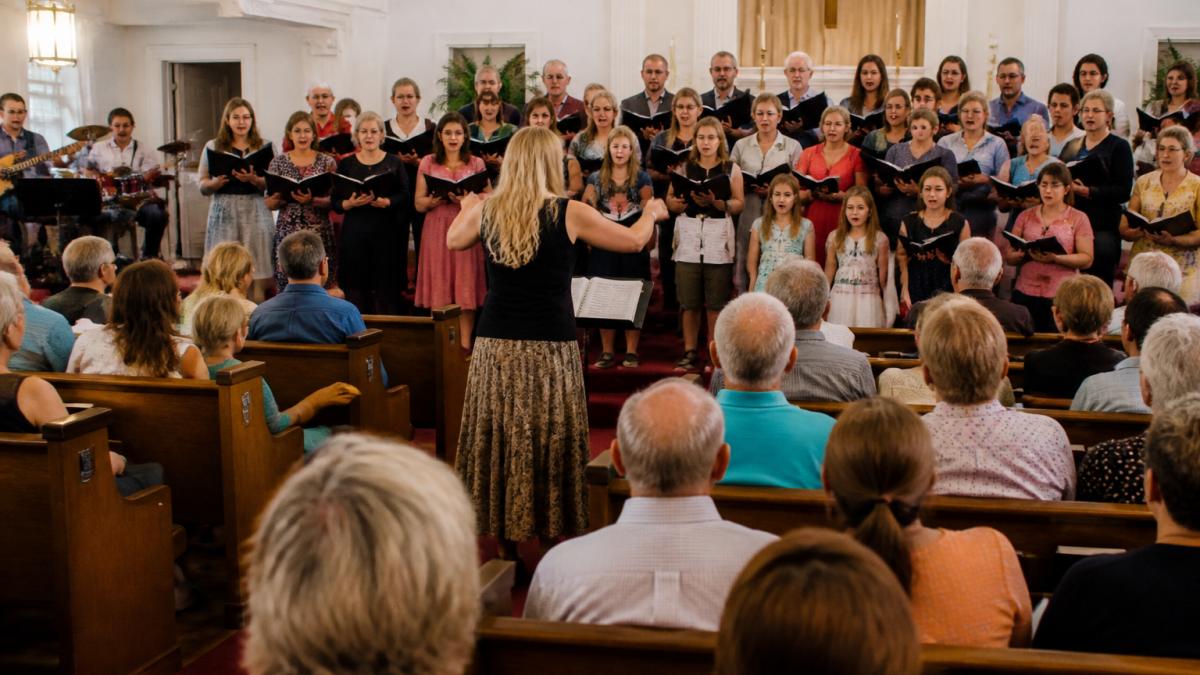
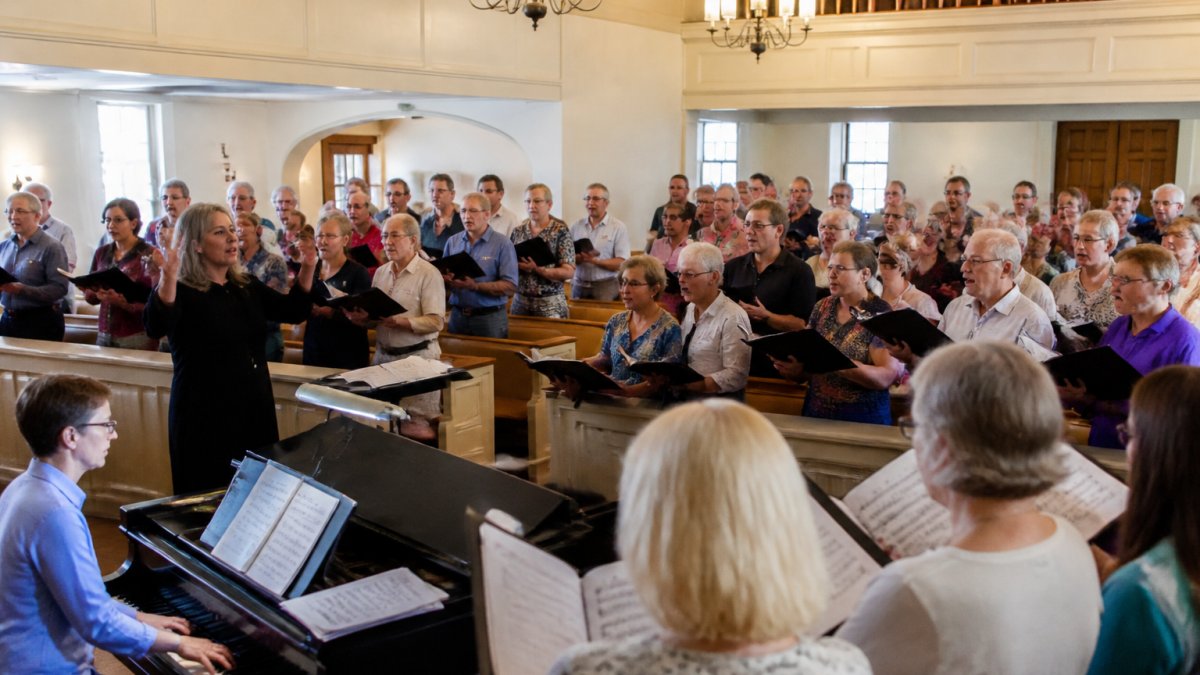
Instead, position the choir where they can see the congregation and the congregation can see them. This might mean moving them to the side of the chancel.
When the service begins, the choir leader should make eye contact with the congregation. Smile. Nod. Set an inviting tone before the first note sounds. This nonverbal communication says: we're doing this together.
As the music unfolds, the choir leader watches the congregation. Are people singing? Are they hesitant? Adjust in real time.
After the song, pause. Let the sound settle. This silence honors what just happened. It gives people a moment to feel the weight of singing together. Then move forward with intention.
Building Inclusive Participation Across All Voices
Inclusion means more than just asking people to sing. It means making sure there's a place for every voice, every ability, every comfort level.
Some people can't sing for medical reasons. Some are deaf or hard of hearing. Some have autism and find group singing overwhelming.
A truly integrated program makes space for all of them.
For those who can't sing, give them other roles. They might hold the words for others to read.
For deaf and hard-of-hearing members, provide ASL interpreters. Position them where they can see the choir leader and the flow of the music.
For people who speak other languages, consider offering songs in multiple languages or providing translations.
For people with sensory sensitivities, create a quiet space where they can still participate but with reduced volume.
For skeptics and newcomers, don't push. Invite. Often, when people feel safe and not pressured, they'll join naturally over time.
Measuring and Sustaining Integration Over Time
You can't improve what you don't measure. But measuring integration isn't about counting voices. It's about noticing change.
Start with simple observation. In your first month of integration work, how many people are singing? A rough percentage is enough.
Then notice the quality of participation. Are people smiling? Do they look engaged? Are they making eye contact with each other? These signs matter more than volume.
After three months, observe again. Is participation growing? Is the energy shifting? Are people lingering after worship to talk about the music?
Ask people directly. In a simple survey or conversation, ask: Did you feel welcomed to sing? Did you feel like your voice mattered?
Track attendance and engagement over a longer arc. People come back because they feel like they belong.
Most importantly, keep the mission clear. Integration isn't a project with an end date. It's a shift in culture.
Frequently Asked Questions
How do you balance choir-led music with congregational singing?
The key is alternation and invitation. Designate specific verses or sections where the choir leads, then clearly signal when the congregation joins. Train your choir to model enthusiasm and vocal quality without overpowering the congregation's sound. Choose songs with a clear melody that congregants can follow, and consider having the choir sing the first verse alone to establish the tune before inviting everyone in. This creates a natural rhythm that feels collaborative rather than performative.
What are some effective ways to help people who feel they cannot sing participate?
Create a culture where participation matters more than perfection. Offer varied entry points: singing, humming, swaying, or simply standing with the community. Choose songs within a comfortable vocal range for average singers. Train worship leaders to sing with warmth and invitation rather than flawless technique. Consider offering a brief teaching moment before a new song, normalizing the learning process. Most importantly, communicate that every voice, including those who think they can't sing, belongs in worship and strengthens the community.
How can a church music leader choose songs the congregation can sing?
Select songs with a limited vocal range (typically one octave or less), clear and memorable melodies, and lyrics that repeat. Balance new songs with familiar ones so congregants aren't always learning. Test songs by singing them yourself at a comfortable speaking pitch. Avoid overly complex harmonies or rhythms that require significant musical training. Consider your congregation's musical background and preferences. Mix traditional hymns with contemporary songs to honor different generations. Songs that build gradually, starting simple and adding layers, help everyone find their entry point.
How can choir members model participation without overpowering the congregation?
Train your choir to sing with intentional restraint during congregational sections. They should focus on clarity and warmth rather than volume or technical display. Position the choir where they're visible but not dominant acoustically. Encourage choir members to make eye contact with the congregation and smile, their joy and openness invite participation. During rehearsals, emphasize that the choir's role in integration is to serve the congregation's voice, not showcase their own. When the congregation sings, the choir supports and blends, creating a unified sound that lifts everyone's confidence.
How to integrate choir and congregation is the question many churches are asking. Let Her Sing! offers a framework for answering it. The book and resources guide you through building foundations for wide-open-door, inclusive worship where every voice finds its place. Your church doesn't need perfect music. It needs responsible stewardship, clear leadership, and the courage to let go and let God work through the voices of your people. Start with one song. Invite one person. Build from there.