 Comparison
Inclusive Church Alternatives for Worship Compared
Last Updated: November 11, 2026
Quick Summary
An inclusive church alternative for worship is a congregation or resource where every voice is welcome to take part, not only the most skilled singers. Options include searchable directories of affirming churches, individual congregations, and participatory music resources that help existing churches make room for everyone. The right choice depends on whether you are looking for a church home or want to change how your current church sings.
- Directories help you find a specific affirming congregation near you.
- Visit a congregation in person and check its written membership and marriage policies.
- Check whether songs are singable, keys are adjustable, and the congregation sings more than the stage team.
- Ask whether lyrics, hearing assistance, step-free access, and childcare are available.
- Try one or two practical changes, such as rotating song leadership, for six weeks and ask members for feedback.
Table of Contents
- Why People Look for an Inclusive Church Alternative for Worship
- Comparing Worship Alternatives Side by Side
- Practical Criteria for Judging Inclusion
- Inclusive Worship Service Ideas That Work in Practice
- Welcoming Neurodiverse Worshippers
- Building Congregational Music and Community Together
- Choosing Your Next Step Toward an Inclusive Worship Home
- Frequently Asked Questions
Why People Look for an Inclusive Church Alternative for Worship
Many worshippers searching for an inclusive church alternative for worship are looking for a place where every voice feels welcome, not just the most confident singers. At Let Her Sing!, we see this search come from worship pastors, music directors, and everyday churchgoers who sense that their congregation's music has grown narrow. Community-centered worship asks a simple question: who gets to sing?
The answer shapes the whole service. A church that treats music as a performance for a few skilled people leaves most of the room silent. The Barna Group research on church attendance and belonging has tracked how many people describe their faith community as a place of real connection, and that sense of belonging often begins with being able to take part.
People who move toward an inclusive church alternative usually want one of three things: a faith community that affirms them, a worship style that fits how they experience God, or a congregation where music helps people connect rather than divide them. The search term is broad because the need is broad. Some readers are leaving a church that felt closed. Others are looking for a first church home and want to know what to expect.
The rest of this guide compares the main worship alternatives, gives you criteria for judging how inclusive a church really is, and offers practical ideas you can test in your own setting. For more concrete inclusive service ideas, see inclusive service ideas that already work for churches. The Pew Research Center findings on religious affiliation and worship practices provide useful context on how congregations across traditions are changing, and that change is where this guide begins.
Comparing Worship Alternatives Side by Side
Inclusive worship options are not interchangeable. Some are directories that help you locate a congregation, some are individual church communities, some are regional networks, and some are music resources for leaders who want to change how their own church sings. Readers often compare them as if they answered the same question, which leads to disappointment.
| Option | What it is | Best for | Main limitation |
|---|---|---|---|
| GayChurch.org Affirming Church Directory | Searchable directory of LGBTQ+-affirming congregations worldwide | Finding a specific affirming church near you | Does not describe worship styles or music programs |
| Bering Church | Church community focused on gathering, mutual support, and helping people thrive | Readers exploring one community as a worship home | Inclusion policies are not verified in available information |
| Urban Village Church | Chicago-based churches describing themselves as inclusive and socially engaged | Chicago readers seeking connection and social justice | Worship music and accessibility details are not described |
| Let Her Sing! | Resource that encourages every voice to participate in congregational worship | Churches wanting to build participatory music and community | Designed for church leaders, not for finding a congregation |
Options of this kind tend to answer different questions. Directories answer "where can I find a congregation?" A single church community answers "what would it be like to worship here?" A participatory resource answers "how does our existing church make room for everyone?" Matching the tool to the question saves time.
Choose by your situation rather than by reputation:
- You are new to a city and want a worship home. Start with a local directory, shortlist two or three nearby congregations, then visit each one using the evaluation checklist in the previous section.
- You are leaving a church that felt closed. Look for a congregation whose written policies, leadership, and music match what you need, and give yourself several visits before deciding. Your first Sunday is information, not a verdict.
- You lead music in a church that wants to grow. A participatory resource is more useful than a directory, because the change you need happens in your own service plan and leadership habits.
- You prefer a specific worship style. Decide first whether you want liturgical, contemporary, gospel, or quiet and contemplative worship, then check each congregation's recorded services or published order of service.
Consider also the level of commitment each path involves. Visiting a congregation requires only attendance. Joining may involve a membership class, a covenant, or regular participation in a small group. Some churches ask for financial giving but do not require it of visitors.
Keep in mind that a church's own description is a starting point, not proof. Directory listings and websites may be incomplete or out of date, so confirm what matters to you through direct questions and, where possible, a visit.
Practical Criteria for Judging Inclusion
A church can call itself inclusive without practicing inclusion in its music, language, or leadership.
Leadership and participation. Look at who is on the worship team, who reads Scripture, who gives announcements, and who preaches over a month of services rather than a single Sunday.
Marriage, family, and membership policies. Find the written membership covenant, statement of faith, or policy on marriage and ordination. Many congregations post these on their websites or in a welcome packet.
Music and participation design. Check whether songs are singable for an average adult, whether keys are adjustable, and whether the congregation sings more than the stage team does.
Language. Review the bulletin, sermon notes, and prayers for gender-inclusive wording, varied images of God and people, and references that welcome different family structures and life experiences.
Accessibility. Ask whether the church provides large-print or projected lyrics, hearing assistance, step-free access, quiet or low-stimulation spaces, and childcare that does not require parents to leave the building.
Safeguarding and accountability. A welcoming congregation also protects the people in it.
A short evaluation checklist. Use these questions on a first visit or an email exchange:
- Who leads worship and reads Scripture this month?
- Where can I find the church's membership and marriage policies in writing?
- How do members with different abilities and backgrounds take part in worship?
- Are lyrics or music available in accessible formats?
- What is the process for new members, and what commitments does it involve?
- How does the congregation handle questions and disagreement?
Record what you observe, compare it with what the church says about itself, and give the most weight to consistent, written, and repeated evidence.
Inclusive Worship Service Ideas That Work in Practice
Inclusion becomes real when it shows up in the service plan. Here are ideas congregations can test without a major budget.
- Rotate song leadership. Invite different members to lead one song a month. This spreads ownership and surfaces voices that rarely get heard.
- Offer a range of keys and tempos. Publish two versions of key songs so people with different vocal ranges can join in comfortably.
- Mix familiar and new music. Pair a well-known hymn with a newer song each week so both longtime members and younger attendees feel at home.
- Create a call-and-response moment. Short, repeatable responses let people join immediately, including those new to the church.
- Share lyrics on screen or in print. Clear lyrics help everyone sing, including those who read slowly or are new to the songs.
Pick one or two ideas and try them for six weeks. Ask members what they noticed. Small, steady changes usually build more trust than a sudden overhaul.
Welcoming Neurodiverse Worshippers
Neurodiverse members, including people with autism or ADHD, often experience worship very differently. For a deeper, practical guide to making worship accessible for neurodivergent people, explore the full resource. Loud volume, sudden transitions, and crowded spaces can make participation hard. A welcoming church plans for these needs without making anyone feel singled out.
Simple steps help. Share the order of service in advance so people know what to expect. Offer a quiet seating area near the back or side, with a clear view of the front. Use predictable transitions, and give a short signal before a loud moment. Provide sensory tools such as earplugs, fidget items, or noise-reducing headphones at the welcome table.
Ask members directly what helps them. Many neurodiverse people are glad to share, and their answers often improve the experience for everyone, not only for them.
Building Congregational Music and Community Together
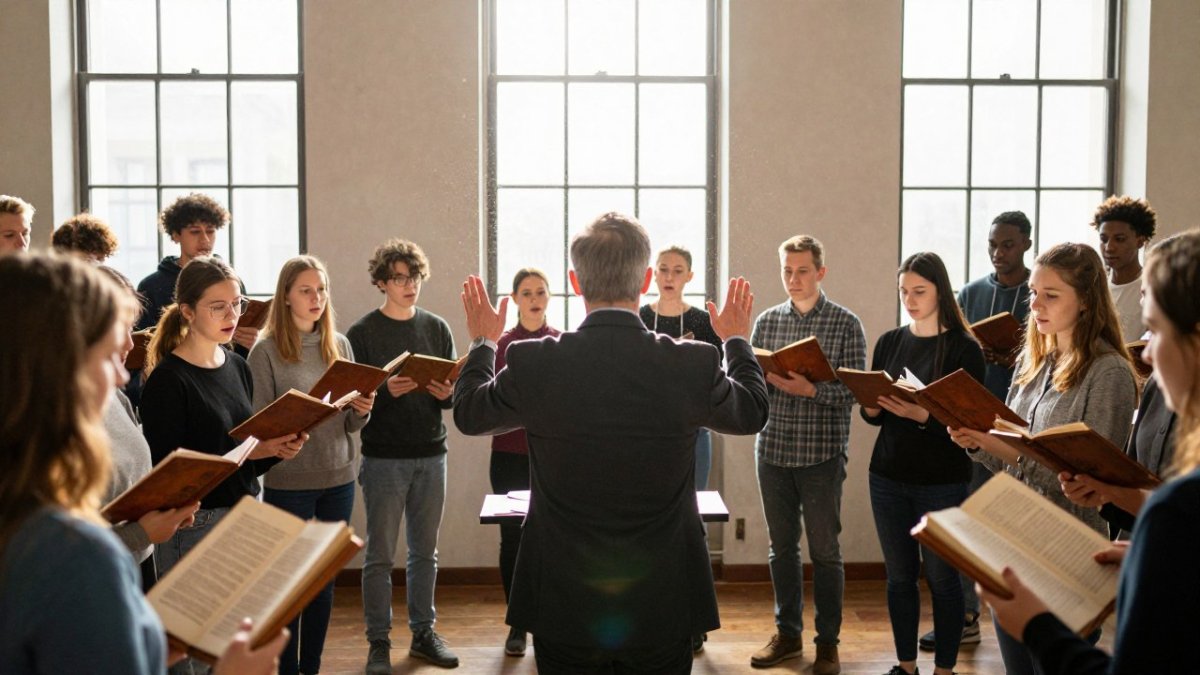
The strongest congregations treat music as a shared act rather than a show. When everyone sings, the room sounds different, and people feel they are part of something larger than themselves.
!A diverse group of adults and children singing together in a bright, simple church sanctuary with hymnals open
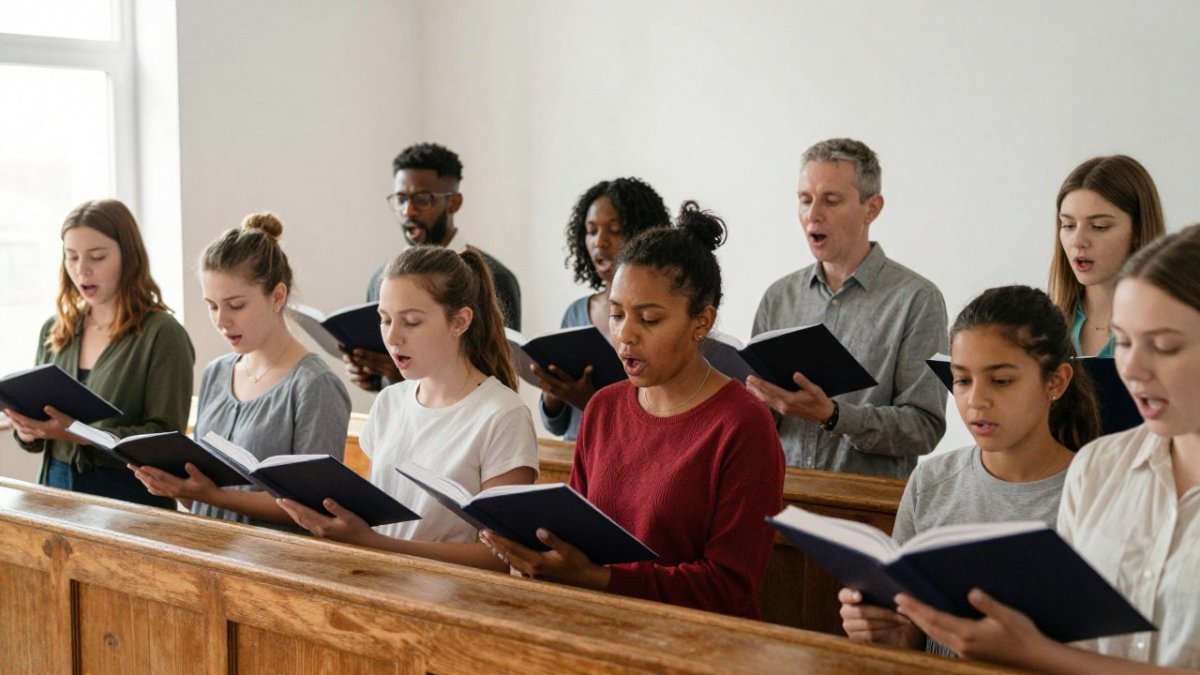
Building that culture takes time. Start by naming the goal publicly: every voice belongs in this room. Then make participation easy. Teach new songs in short segments, repeat favorite refrains, and celebrate when someone who rarely sings joins in. Leaders can model this by singing openly rather than hiding behind a microphone.
Community also grows outside the service. Small groups, shared meals, and service projects give people reasons to know one another. Music that unites people in Sunday worship carries into the rest of church life. If you are setting up a music program, a practical guide to community worship music programs walks through the details.
Choosing Your Next Step Toward an Inclusive Worship Home
Your next step depends on where you stand. If you are looking for a church, start with a local directory of affirming congregations, then visit a congregation in person and use the criteria above. If you lead worship or music in a church that wants to grow more participatory, begin with one practical change and measure how it feels over a few weeks.
Either way, expect your first attempt to be imperfect. Inclusion is a practice, not a finish line. Let Her Sing! exists to encourage churches in that practice, helping every voice find its place in congregational worship. Show Me how a participatory approach could fit your congregation's music ministry.
Frequently Asked Questions
What are some ideas for alternative worship services?
Alternative worship services often change the format rather than the message. Common options include small home gatherings, contemporary or creative services with a band and participatory singing, evening services, and online services for people who cannot attend in person. Some congregations also add shared-reading or open-prayer segments that invite more people to speak. When comparing options, look at how each one invites participation from every voice, not only from the most confident singers. A good test is whether a newcomer could join in without prior training.
What makes a church inclusive?
An inclusive church makes its welcome visible in practice, not only in a statement. Signs include clear language in its public materials about who is welcome, worship that invites participation from all ages and abilities, leadership that includes people from different backgrounds, and a willingness to explain how decisions about music and roles are made. Ask whether the church's stated welcome shows up in its service times, its music choices, and its response to questions. An inclusive church statement is useful only when the congregation lives it out.
How can a church make worship more inclusive?
Start with the elements people encounter most often: printed materials, song keys and ranges, seating, and how music is introduced. Offer lyric slides and clear cues so people can follow along. Choose songs with a comfortable vocal range for ordinary voices, and invite the congregation to sing rather than only performing for them. Review language in prayers and announcements so it welcomes a wide range of people. Ask members with different experiences what would make worship easier for them to join, then act on what you hear.
How can neurodiverse people be included in worship?
Neurodiverse worshippers often benefit from predictable structure, advance notice of what will happen, and options for lower sensory load. Provide a printed order of service, allow people to step out and return without explanation, and offer quiet seating away from speakers. Describe any loud or sudden moments before they happen. Keep songs and spoken parts clear and avoid requiring a single way of responding. Asking individuals what helps them is more reliable than assuming one solution fits everyone.