 Listicle
Inclusive Church Resources for Worship That Welcome Every Voice
Last Updated: November 15, 2026
Quick Summary
Inclusive church resources for worship are the liturgies, song selections, language guides, accessibility materials, and planning tools that help a congregation welcome every person into worship. Most churches already own more of these resources than they realize, so the gap is usually organization, not scarcity. Start by listening to your congregation, then test small changes in a single service.
- Run a four-to-six-week listening season and write down where people felt included or outside.
- Include a preferred name and pronoun line on welcome cards and small-group sign-ups.
- Choose songs with repeated refrains and comfortable keys so the congregation can actually sing.
- Print a bilingual order of service with both languages side by side, not one after the other.
- Review participation quarterly on one page: three improvements, three gaps, one change.
Table of Contents
- What Inclusive Church Resources for Worship Actually Include
- Inclusive Worship Practices That Start With the Congregation
- Inclusive Language Resources for Worship: Names, Pronouns, and Scripture
- Building an Inclusive Church Music Ministry Where Every Voice Sings
- Multilingual Worship Service Practical Tips for Bilingual Congregations
- Accessibility for Disabled and Neurodivergent Worshippers
- How to Measure Whether Your Inclusive Church Resources Are Working
- Start With One Voice: Building Your Church's Inclusive Worship Foundation
- Frequently Asked Questions
What Inclusive Church Resources for Worship Actually Include
Inclusive church resources for worship are the materials, liturgies, song selections, language guides, and planning tools that help a congregation welcome every person into the life of worship, not just the front row.
So what belongs in a working collection? Five categories cover almost everything:
- Liturgy and prayer resources: calls to worship, litanies, communion prayers, and benedictions written with inclusive language
- Music resources: hymn suggestions, song lists, and arrangements that work for untrained singers
- Language guides: notes on names, pronouns, and the words people use for themselves
- Accessibility materials: large print, visual aids, and sensory considerations
- Planning tools: service templates, lectionary connections, and evaluation sheets
The mistake most churches make is treating these as separate projects. They are not. A call to worship, a hymn choice, and a pronoun practice all do the same work: they tell people whether they are expected here.
Inclusive Worship Practices That Start With the Congregation
The strongest inclusive worship practices begin with listening, not with a shopping list.
A practical first step is a short listening season.
From there, test small changes in a single service rather than overhauling everything. Add a spoken welcome that names first-time guests. Print the full text of sung responses so no one has to guess.
One caution from experience: don't announce a new inclusion initiative from the pulpit and then let it fade by the second week. People notice. Consistency is the message.
Inclusive Language Resources for Worship: Names, Pronouns, and Scripture
Inclusive language resources for worship give church leaders practical guidance on the words used in services, and the most important word is a person's name. Learn names. Use the pronouns people use for themselves.
A few habits carry most of the weight:
- Ask, don't assume. Include a preferred name and pronoun line on welcome cards and in small-group sign-ups.
- Train the platform. Readers, prayer leaders, and greeters should all know the same practice, so no one gets blindsided mid-service.
- Review the liturgy. Look for gendered language about God and about people, and decide together what your congregation can pray with integrity.
- Handle scripture thoughtfully. Many churches pair a familiar translation with an inclusive Bible translation for readings, and note the choice in the bulletin.
The Calvin Institute of Christian Worship offers a widely used article on making worship and church life more inclusive across abilities that recommends paying close attention to language and offering options for written materials. For the broader set of concrete ideas, our own guide to inclusive worship ideas for churches walks through options you can adapt.
Watch out: correcting someone's pronoun from the lectern or in front of the congregation does more harm than the original mistake. Handle corrections privately and gently.
Building an Inclusive Church Music Ministry Where Every Voice Sings
An inclusive church music ministry is one where the congregation is the primary choir and the platform exists to serve them. For a deeper look at choosing music for a mixed congregation, see our guide to worship music for diverse congregations.
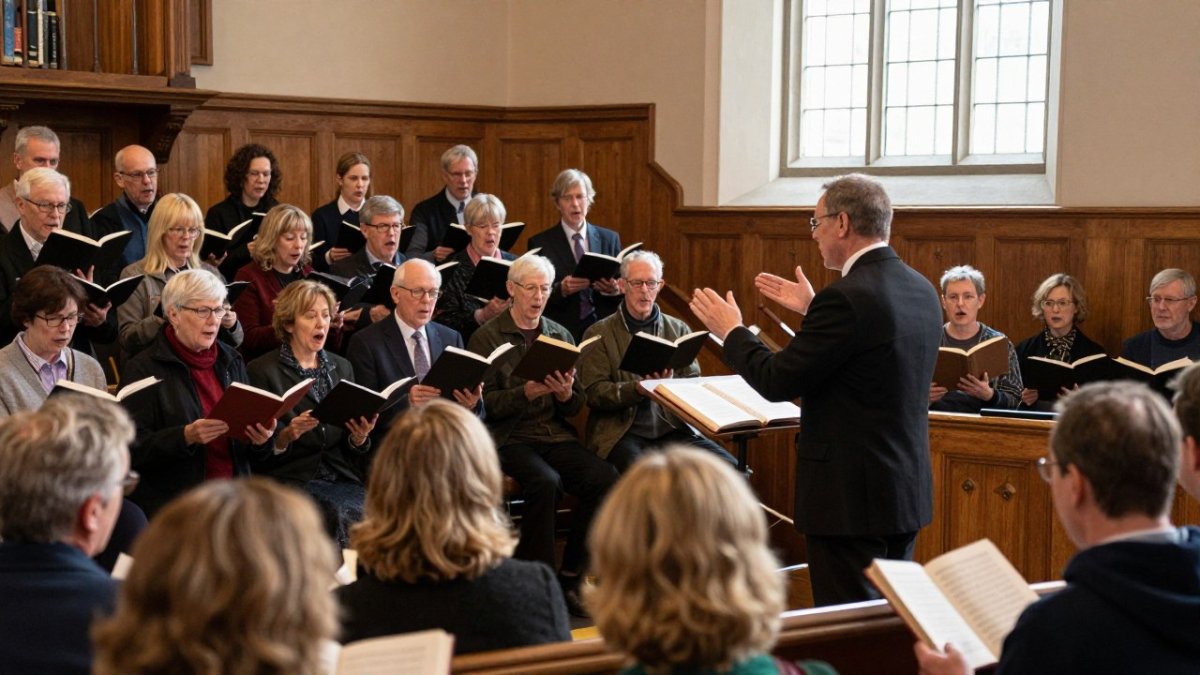
Start with songs the assembly can actually sing. A song that requires a skilled band and a confident ear will leave most of the room silent.
Then look at who is on your stage.
One more thing most guides miss: the sound team is part of the music ministry. If the mix buries the congregation, people stop singing. Walk the room during rehearsal and listen from the back row.
Multilingual Worship Service Practical Tips for Bilingual Congregations
A multilingual worship service works best when both languages get real space in the service, not a translation tacked on at the end.
Practical steps that hold up in real churches:
- Print a bilingual order of service with both languages side by side, not one after the other, so readers can follow either column without flipping.
- Choose songs with shared melodies so the whole room can sing the same tune in two languages at once; a familiar hymn tune carries a new text far better than a new tune carries a familiar text.
- Assign readers in pairs for scripture and prayers, one voice per language, and rehearse the handoff so the service does not stall.
- Brief your volunteers on what will happen and when, including ushers and sound; a bilingual service fails most often at the sound board, not the lectern.
- Build in silence so people can follow along without rushing, and so the room can hear both languages settle.
When you go looking for materials, the useful question is not "which bilingual resource is best" but "which resource fits our people, our tradition, and our format." A short selection guide helps:
| Resource type | Who it serves | Format to look for | Watch for |
|---|---|---|---|
| Lectionary-based liturgies in two languages | Pastors and worship planners | Side-by-side text, printable | Whether the translation is authorized for public worship use |
| Hymnals and song collections with bilingual texts | Music leaders and congregations | Shared melody, both texts under the staff | Reprint and streaming permissions |
| Scripture reading plans | Readers and small groups | Parallel columns, large print option | Which translation your tradition recognizes |
| Prayer and response cards | The whole assembly | Pew card or bulletin insert | Whether non-readers can participate |
For a step-by-step walkthrough, our guide to planning a multilingual worship service covers the full sequence from first meeting to Sunday.
Watch out: do not let one language become the "special music" language. If the second language only appears in a single song or a single prayer, the congregation learns that it is a guest in the service, not a co-owner of it.
Accessibility for Disabled and Neurodivergent Worshippers
Accessibility for disabled and neurodivergent worshippers is where inclusive church resources for worship most often fall short, and where the payoff is largest. A congregation that plans for wheelchairs, hearing aids, sensory needs, and reading differences is a congregation that has thought about the body in the pew, not just the words on the screen.
What actually helps, in practice:
- Provide options for written materials: large print, plain-language versions, and a screen that isn't cluttered
- Describe the space in advance on your website, including entrances, seating, and noise levels
- Offer a quiet room and name it in the welcome, so no one has to ask
- Keep a consistent service rhythm where you can, since predictability helps many people participate
- Caption and stream for those joining from home
For congregations taking this seriously, our article on making worship accessible for neurodivergent people goes deeper on sensory planning and communication. The work is not a special project; it is stewardship of the room God gave you.
How to Measure Whether Your Inclusive Church Resources Are Working
You measure inclusive church resources for worship by watching participation, not by counting how many resources you own. A resource collection that sits on a shelf has changed nothing.
A simple quarterly review covers most of it:
| What to watch | What it tells you | What to do with it |
|---|---|---|
| Congregational singing volume | Whether songs are singable | Adjust keys and repertoire |
| Return visits from first-time guests | Whether the welcome holds | Review greeter and follow-up practice |
| Choir and volunteer sign-ups | Whether the door is actually open | Revisit audition and scheduling norms |
| Feedback from listening groups | Where people still feel outside | Set one concrete change per quarter |
| Accessibility requests and gaps | What the building and materials miss | Prioritize the cheapest fixes first |
A table is only as good as the process around it. First, assign one person to gather the numbers and the comments before the meeting, so the conversation starts from evidence rather than impressions. Second, keep the review to one page: three things that improved, three that did not, and one change for the next quarter. Third, close the loop with the people who gave feedback, because a listening group that never hears back stops listening. Fourth, hand the one-page summary to leadership and to the volunteers who carry the work, since a report nobody reads changes nothing.
For a fuller framework, our guide to measuring success in music ministry lays out the questions to ask and how to track answers over time. Keep the review short and repeatable. A one-page summary shared with leadership beats a thick report nobody reads.
Watch out: do not turn the review into a performance score for staff or volunteers. The moment people feel measured rather than heard, the honest feedback dries up, and the numbers stop telling you anything true.
Start With One Voice: Building Your Church's Inclusive Worship Foundation
The throughline of all of this is simple: the church is the place for your music, and each church needs to make a place for each person's music. That is the argument at the heart of our book, Let Her Sing!, and it is why we keep coming back to the congregation rather than the platform.
You do not need a large budget or a committee to start. Pick one voice that has gone quiet, one practice you can change this month, and one person who will help you keep it going. Then let go and let God.
If your church is ready to widen the door, Let Her Sing! is built to help. The book invites every voice into the life and worship of the congregation, with a focus on community-based worship and advocacy for inclusive congregational singing.
Frequently Asked Questions
What does inclusive worship mean in practice?
Inclusive worship means every person can fully participate in the service, not just attend it. That includes accessible language in prayers and liturgies, music that welcomes different abilities and ages, scripture readings in translations that avoid exclusionary phrasing, and physical access for disabled worshippers. It also means inviting LGBTQ+ members into leadership and using the names and pronouns people use for themselves. The goal is a service where each person recognizes their own voice in the worship, not one where a few people perform for everyone else.
How can music help people feel included in church?
Music is often the most participatory part of a service, which makes it a strong starting point for inclusion. Simple, repeated songs let people join without training, and printing lyrics in large type or projecting them helps those with low vision. Adding songs in the congregation's home languages, inviting children to sing, and choosing hymns that avoid gendered or exclusive language all widen the door. When a church music ministry plans for participation rather than performance, more people sing, and that shared singing builds community.
Where can I find inclusive church resources for worship planning?
Several denominations and organizations publish inclusive worship materials. For the musical side, Let Her Sing! makes the case for community-based congregational singing and for inviting every voice into the church's music.
How can churches use inclusive language in worship?
Start with names and pronouns: ask members what they use for themselves and record it for worship leaders and greeters. Review prayers, litanies, and calls to worship for phrasing that assumes gender or excludes people with disabilities. Choose scripture translations that reflect your congregation's commitments, and note them in the bulletin so readers can follow along. Small changes add up, such as replacing 'brothers and sisters' with 'siblings in Christ' or 'beloved community.' Review materials each season so new resources match the same standard.
How can a church invite more people to participate in its music ministry?
Lower the entry point. Offer a no-audition choir or a sing-along Sunday where anyone can join without rehearsal. Ask older members what songs they remember by heart and pair them with younger musicians. Provide large-print lyric sheets and a quiet option for those who find loud music overwhelming. Let the pastor and worship leader name participation as a value from the pulpit, not just in the bulletin. When people see that the goal is shared singing rather than a polished performance, more of them step forward.