 Comparison
PraiseCharts vs LifeWay Worship: Church Guide 2026
Table of Contents
- PraiseCharts vs LifeWay Worship: Quick Comparison for Churches
- PraiseCharts: Modern Worship Arrangements and Orchestration
- LifeWay Worship: Traditional Hymnody and Choral Resources
- Licensing and Copyright Compliance: What Churches Must Know
- Choosing the Best Worship Music Planning Software for Your Team
- How to Choose Worship Arrangements for Small Churches
- Frequently Asked Questions
Last Updated: September 30, 2026
PraiseCharts vs LifeWay Worship: Quick Comparison for Churches
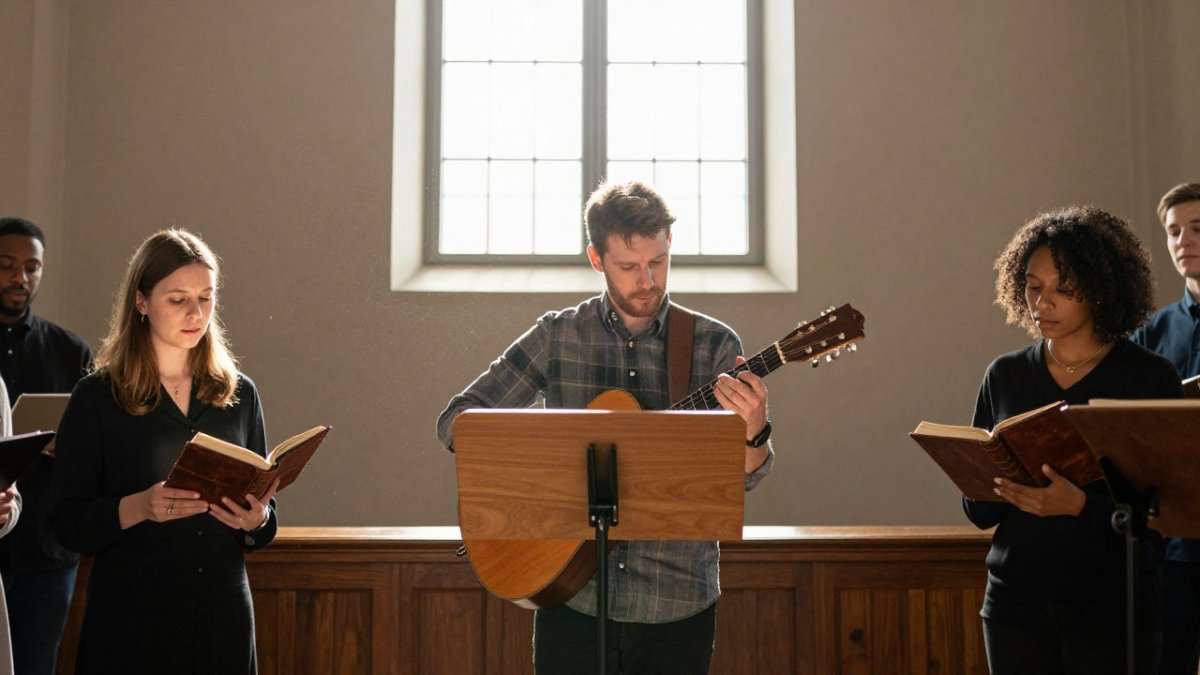
Choosing between PraiseCharts and LifeWay Worship, the praisecharts vs lifewayworship decision, comes down to one question: what kind of sound does your congregation actually sing? PraiseCharts is a song and arrangement library built for modern worship bands, while LifeWay Worship is a hymnal and choral resource rooted in traditional church music. This guide from Let Her Sing! breaks down where each platform fits, what they cost in effort, and how to pick the right one for your music ministry.
| Feature | PraiseCharts | LifeWay Worship |
|---|---|---|
| Primary focus | Modern worship arrangements | Hymnody and choral music |
| Orchestration depth | Full instrumental and vocal parts | Choral and ensemble arrangements |
| Key flexibility | Multiple keys per arrangement | Standard hymnal keys |
| Rehearsal tracks | Available for many titles | Limited |
| Best for | Contemporary bands | Choirs and blended services |
PraiseCharts: Modern Worship Arrangements and Orchestration
PraiseCharts is a digital sheet music platform built around contemporary worship songs, offering arrangements for full bands, orchestras, and vocal teams. Its catalog leans heavily on modern worship, which makes it the natural starting point for churches running a guitar-and-drums worship set.
Key Signatures, Transposition, and Rehearsal Tracks
Key flexibility is where PraiseCharts separates itself. Most arrangements are available in several key signatures, so a worship leader can match the congregation's comfortable singing range instead of forcing a key that suits the recording.
LifeWay Worship: Traditional Hymnody and Choral Resources
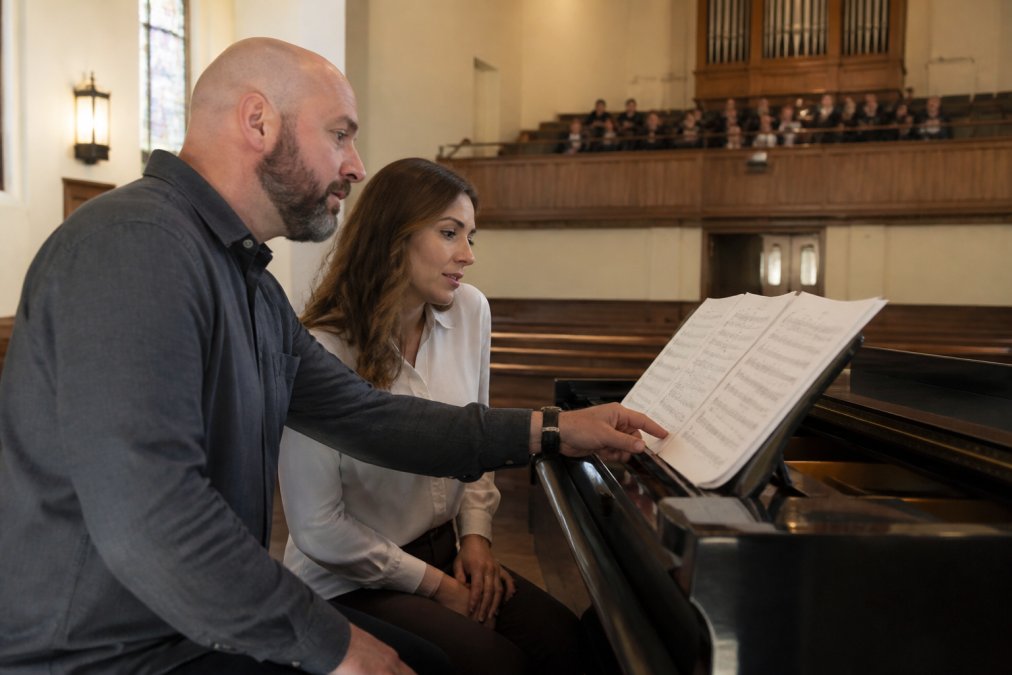
LifeWay Worship serves churches that sing from the hymnal, with a deep catalog of classic hymnody, liturgical resources, and choral arrangements. It's the stronger choice when your service leans on a choir, an ensemble, or a blend of traditional and modern worship.
Lead Sheets, Chord Charts, and Vocal Arrangements
The format question matters more than it sounds. Lead sheets give you melody, lyrics, and chords on one page. Chord charts strip out the melody and leave the harmonic roadmap. Vocal arrangements split parts across soprano, alto, tenor, and bass.
Licensing and Copyright Compliance: What Churches Must Know
A subscription to either platform does not, on its own, give your church the right to project lyrics or print songs for congregational singing. That coverage comes from a separate license, most commonly through CCLI's church copyright licensing program.
Choosing the Best Worship Music Planning Software for Your Team
The best worship music planning software is the one your volunteers will actually open on a Tuesday night. Feature lists matter less than whether your team can find a song, transpose it, and rehearse it without calling you for help.
How each library actually plugs into a planning tool
Most churches run one of a handful of planning platforms, Planning Center Services, WorshipTools (formerly Worship Team), or a general-purpose tool like Google Sheets plus a shared drive. The integration question is not 'does the library have an app?' but 'how do files move from the library into the plan?'
- PraiseCharts delivers most arrangements as downloadable PDFs, plus audio rehearsal tracks and, for many titles, editable notation files (Finale, Sibelius, and MusicXML exports on select arrangements). That means a music director can drop a PDF into a Planning Center Services plan item, attach the MP3 for the team, and, if the arrangement supports it, hand a MusicXML file to a volunteer who edits in MuseScore or Finale at home.
- LifeWay Worship leans toward printed-style choral and hymnal resources. Its catalog is built around vocal scores and accompaniment, so the natural workflow is PDF attachment plus physical or projected scores rather than editable notation handoffs. That is not a weakness for a choir-driven service; it is a mismatch for a band that wants to re-voice parts.
The file-format question nobody asks up front
Before you subscribe, ask two questions of any library:
- What export formats do I get? PDF is universal. MusicXML is the one that matters if anyone on your team edits notation. Finale and Sibelius native files are a bonus, not a baseline.
- Can I attach the file to a plan item without re-uploading it every week? Planning Center Services, for example, lets you attach files to a plan, but it does not pull from PraiseCharts or LifeWay automatically, someone still has to download and attach. Budget that admin time.
The three-part stack most churches actually need
Planning software sits alongside your arrangement library, not instead of it. Most teams need three things working together:
- A song library for arrangements and parts (PraiseCharts or LifeWay Worship)
- A licensing body for copyright coverage (typically CCLI for congregational use)
- A planning tool for setlists, service planning, and team collaboration (Planning Center Services, WorshipTools, or similar)
How to Choose Worship Arrangements for Small Churches
Small churches should prioritize arrangements their existing musicians can play without hiring anyone. That usually means chord charts over full orchestration, and keys chosen for the congregation rather than the recording. But two practical questions decide most small-church subscriptions, and most comparison articles skip both.
The tablet question: where do your volunteers actually rehearse?
A worship leader on a tablet at Wednesday rehearsal has a different experience than a music director at a desktop. This is the biggest under-covered gap in praisecharts vs lifewayworship comparisons.
- PraiseCharts is built around downloadable PDFs and audio tracks. On an iPad or Android tablet, that means a PDF reader app plus a separate audio player, workable, but you are juggling two apps. Chord charts and lead sheets render cleanly because they are single-page or two-page layouts.
- LifeWay Worship resources skew toward multi-page choral scores and hymnal layouts. On a tablet, a four-part choral octavo means pinching and scrolling mid-rehearsal, which is why many choir directors still print. If your team is tablet-first, test a sample score on your actual device before subscribing.
The cost math: subscription vs. per-song
Small churches rarely need a full catalog. If you lead 40 songs a year and rotate 25 of them, a subscription that unlocks hundreds of titles may be more than you need, and a per-arrangement purchase model may cost less.
- Count the distinct songs you will use in the next 12 months.
- Estimate how many need new arrangements versus what you already own.
- Compare that number against the annual subscription price for each platform.
- Add the separate licensing cost (typically CCLI), it is not included in either library subscription.
A practical decision checklist
- Count your regular instrumentalists and what they read (chords, notation, or by ear)
- List the songs your congregation already sings well
- Check whether those songs exist in a comfortable key for your people
- Test one arrangement on your actual tablet or print setup before committing
- Confirm licensing coverage (CCLI or equivalent) before you print or project anything
- Run the 12-month cost math on your real rotation, not the catalog size
- Test one new arrangement for a month before committing to a subscription
Congregational singing is the real measure. An arrangement that showcases your band but leaves the room silent has failed, no matter how good it sounds. That is the point Let Her Sing! keeps returning to: the heart of worship is found in community and collective musical engagement. A resource that encourages every voice in the church, from the choir loft to the back pew, serves that goal better than one that only serves the stage.
Frequently Asked Questions
What are the primary differences between PraiseCharts and LifeWay Worship?
PraiseCharts focuses on modern worship arrangements with multi-track stems and orchestration for contemporary bands. LifeWay Worship leans toward traditional hymnody, choral arrangements, and liturgical resources. Your choice depends on whether your services center on modern worship bands or choir-led congregational singing. Many churches use both, pairing contemporary songs with classic hymns across different services.
Which platform offers better arrangements for small church bands?
PraiseCharts generally suits small bands needing flexible keys, chord charts, and rhythm section parts. LifeWay Worship works well when a choir or ensemble anchors the service. For small churches, assess how many instrumentalists you have, whether you need transposition, and if your team reads notation or chords. Choose the platform that matches your musicians' actual skills rather than the largest catalog.
Do these platforms provide backing tracks for worship services?
PraiseCharts offers rehearsal and performance tracks alongside its arrangements. LifeWay Worship provides choral and accompaniment resources but has less emphasis on modern multi-track production. If your church uses click tracks, stems, or full band backing, PraiseCharts is typically the stronger fit. For simple piano or organ accompaniment, LifeWay covers that need well.
How do subscription models compare for church music licensing?
PraiseCharts and LifeWay Worship operate on subscription or per-resource pricing, but neither replaces a CCLI license for copyright compliance. CCLI covers the legal right to reproduce and display lyrics. Platform subscriptions cover access to arrangements and files. Budget for both: one for content, one for licensing. Check each platform's current terms since offerings change.
Is LifeWay Worship still active for church music resources?
Yes, LifeWay Worship continues to serve churches with hymnals, choral music, and digital resources through its subscription tiers. It remains a strong option for congregations that value traditional hymnody and liturgical resources. Availability of specific titles varies, so confirm current catalog offerings directly with the platform before planning your service music around them.
The hard part isn't picking a platform. It's building a music ministry where the congregation actually sings, not just listens. Let Her Sing! exists to encourage exactly that, with a focus on community-based worship and advocacy for inclusive congregational singing that invites every voice into the life of the church. If your team is ready to think beyond the song library and toward a more participatory worship service, explore the resources at Let Her Sing! and see how they fit your ministry.