 How-to
Engaging Older Members in Worship: A Practical Guide
Table of Contents
- Why Engaging Older Members in Worship Matters
- Step 1: Build Relationships with Older Adults Before Changing Anything
- Step 2: Invite Older Adults to Serve and Lead in Worship
- Step 3: Intergenerational Worship Ideas That Actually Work
- Step 4: Including Older Adults in Church Music and Song Choices
- Step 5: Accessible Worship Services for Seniors and Members with Changing Needs
- Step 6: Measure What Matters and Avoid Common Mistakes
- Conclusion: Every Voice Belongs in the Congregation
- Frequently Asked Questions
Last Updated: October 9, 2026
Why Engaging Older Members in Worship Matters
Engaging older members in worship is not a courtesy. It is one of the clearest signs that a congregation actually means what it sings about community. This guide from Let Her Sing! walks through six practical steps, from listening first to measuring what changes.
The numbers are simple. Many congregations report that their most faithful attenders are also their oldest, yet those same members are rarely asked what they need. That gap shapes everything below.
Step 1: Build Relationships with Older Adults Before Changing Anything
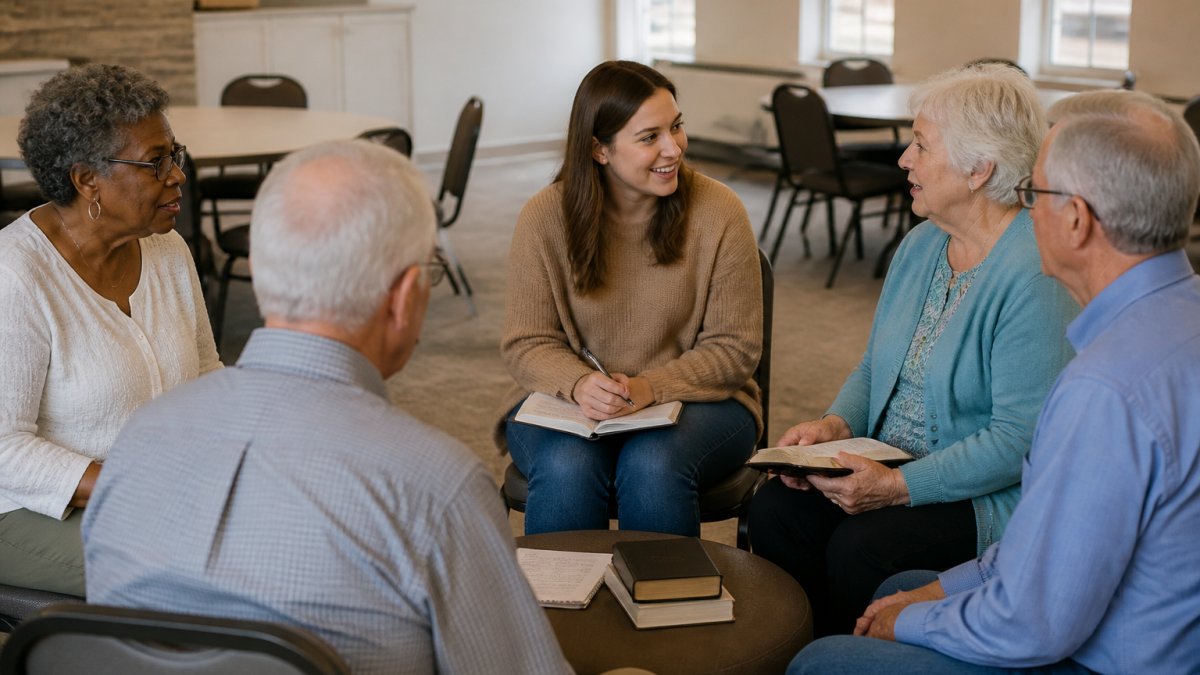
Start with conversations, not committees. Before you change a single song or slide, sit down with older members and ask what worship means to them. A common mistake is launching a new program first and inviting feedback after.
Listening Sessions and Life Story Interviews
Listening sessions work best in small groups of six to ten people. Ask open questions:
- What song has carried you through a hard season?
- When did you last feel truly part of worship here?
- What makes it hard to participate now?
Life story interviews go deeper. Sit with one member at a time and record, with permission, how faith and music shaped their life. These stories become sermons, prayers, and song choices later. They also build the empathy your worship leadership needs.
Step 2: Invite Older Adults to Serve and Lead in Worship
Invitation beats assumption. Many older members assume they have aged out of visible roles. Say the words out loud: we want you leading. Research on belonging consistently shows that people stay engaged when they are needed, not just welcomed. The Harvard Business Review research on belonging at work makes the same point about groups: contribution creates commitment.
Roles That Fit Different Gifts and Energy Levels
Match the role to the person, not the stereotype. Some older adults want to lead prayer from the front. Others prefer quieter service. Consider:
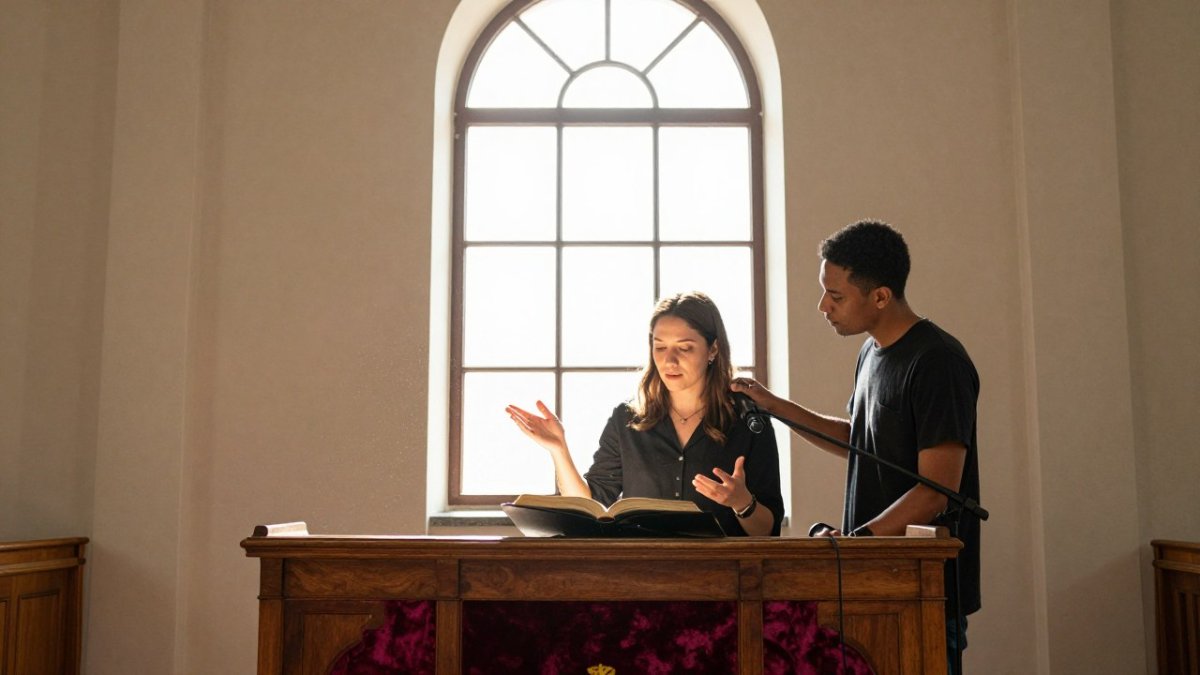
- Scripture reader or prayer leader
- Usher, greeter, or welcome team member
- Communion server
Energy levels change week to week. Offer roles that can flex, and never pressure anyone to commit to more than they can carry.
Step 3: Intergenerational Worship Ideas That Actually Work
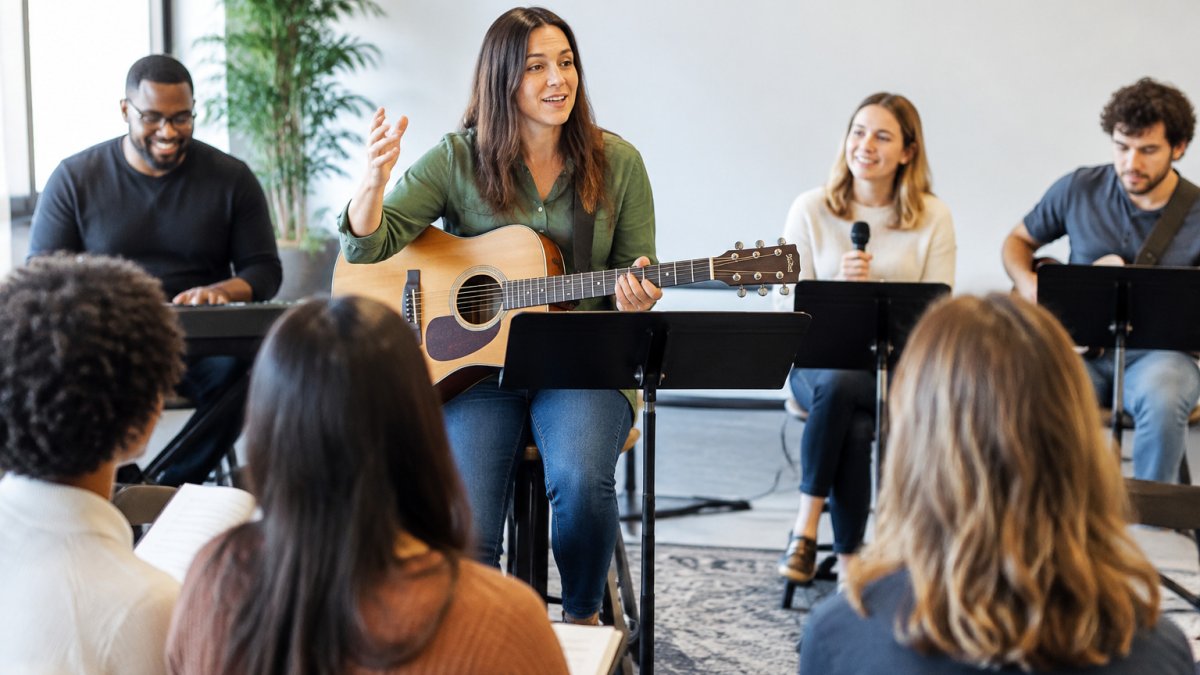
Pair people across ages instead of separating them. Intergenerational worship ideas fail when they become performances. They work when they create real contact. Try a monthly service where older and younger members lead together, or a choir that mixes ages on purpose.
Mentoring Across Generations Through Music
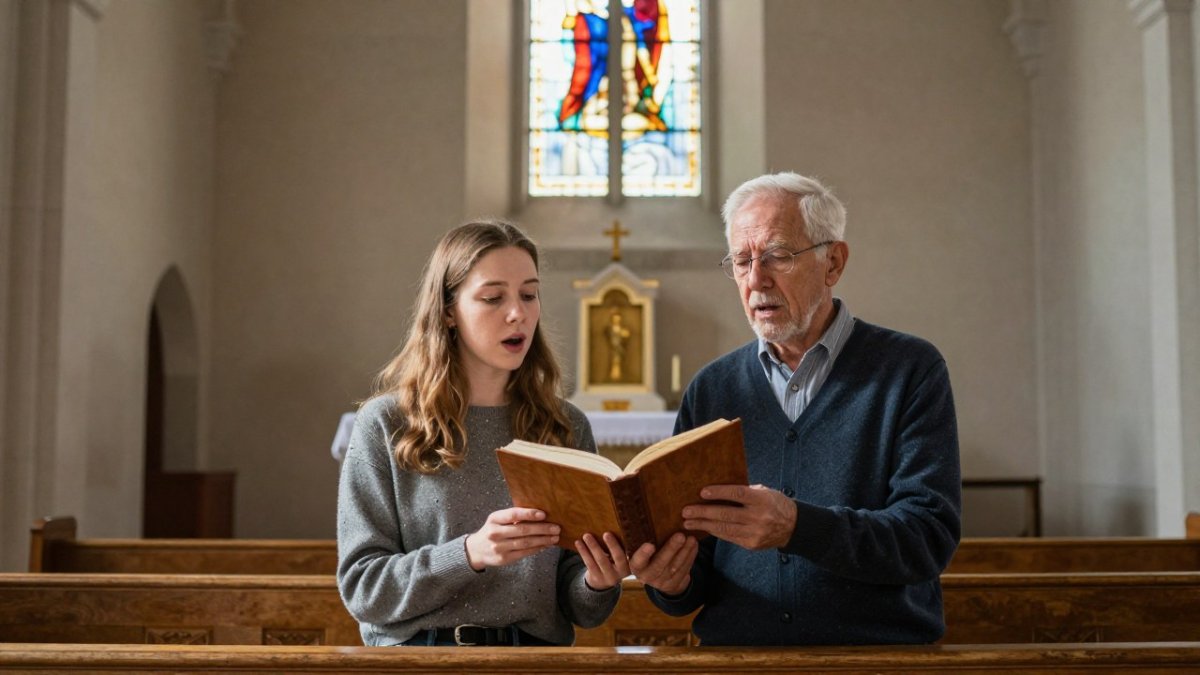
Music mentoring is the simplest entry point. A lifelong church musician can teach a teenager an older chorus. That teenager can teach a new song in return. Both directions matter. When only one group teaches, it is not mentoring, it is replacement.
- Pair a mentor and mentee for one song each month
- Let the mentee choose the new song, the mentor choose the older one
- Rehearse together, then lead the congregation together
Step 4: Including Older Adults in Church Music and Song Choices
Song choice is where inclusion is won or lost. Including older adults in church music does not mean freezing the song list. It means building a list together. A practical rule: for every new song you add, keep two familiar ones in rotation for a season. This respects memory and gives everyone a foothold.
Teaching New Songs Without Leaving Anyone Behind
Teach new songs the way you would teach anything worth learning: slowly, and more than once.
- Introduce the melody once, without words, while the congregation listens.
- Sing the first line only, and repeat it three times.
- Add one line per week rather than the whole song at once.
- Print large-print lyric sheets for anyone who needs them.
- Ask a member who learned it first to lead it the following month.
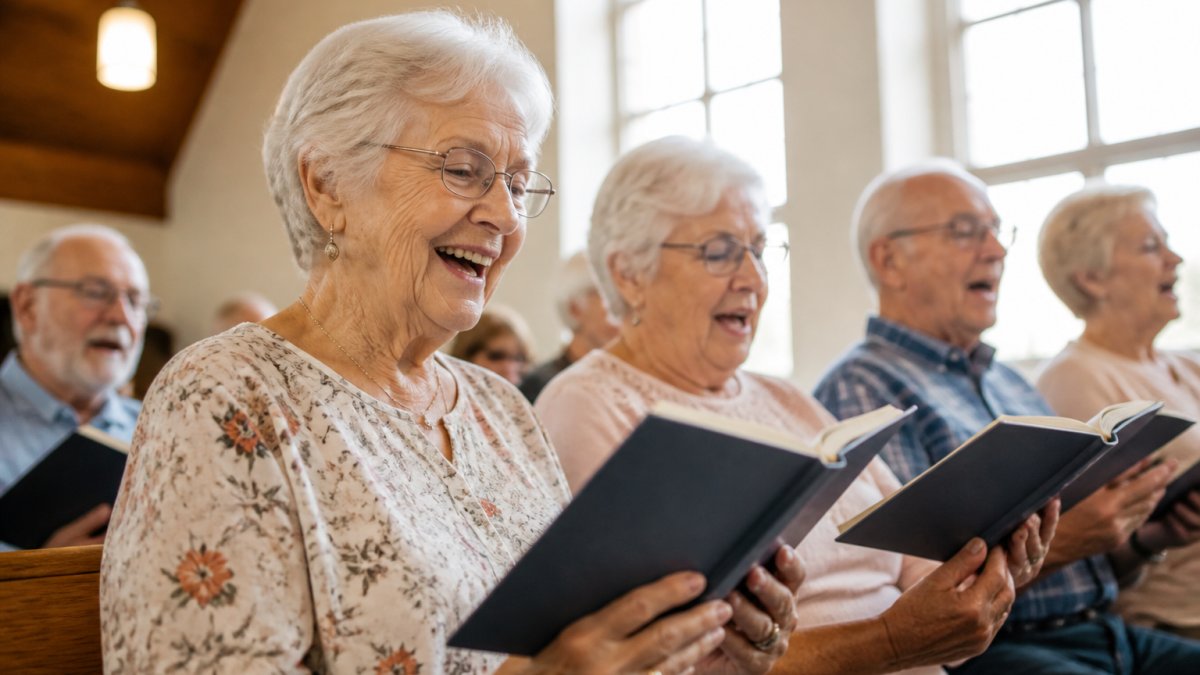
Familiar songs and new songs can share the same service. Hymns and older choruses carry memory. New songs carry hope. A worship service that holds both tells the truth about a congregation that spans generations.
Step 5: Accessible Worship Services for Seniors and Members with Changing Needs
Accessibility is not a special project. It is part of the welcome. But "older adults" is not one audience. A 68-year-old retiree who drives herself to church, an 82-year-old living with early-stage dementia, a 74-year-old caring for a spouse on hospice, and a 90-year-old in a wheelchair have different worship needs. Treating them as a single group is why so many accessibility efforts miss. Accessible worship services for seniors start with four practical checks, can everyone hear, see, reach, and get there?, and then branch by circumstance.
Four Practical Checks, Then Branch by Circumstance
Hearing. Hearing loss is common and often hidden. A sound system with clear audio and a trained operator matters more than volume.
Vision. Large-print bulletins and lyric sheets help, but so does contrast. Dark text on a light background, 18-point minimum, and no all-caps blocks.
Getting there. Transportation is the quiet barrier. A carpooling list run by volunteers often does more for attendance than any new program.
Adapting for Dementia, Caregivers, and Limited Mobility
Different life circumstances call for different adaptations. None of these are one-size-fits-all.
- Members living with dementia. Familiar hymns and the Lord's Prayer often remain accessible long after other memory fades. Keep a predictable order of service, avoid sudden loud transitions, and welcome the same person even when they repeat a question. A caregiver sitting beside them is part of the ministry, not a distraction.
- Caregivers. Many older members are not the ones needing care, they are providing it. Offer a respite-friendly service time, a quiet room with a livestream if they need to step out, and a volunteer who can sit with their loved one so they can worship without one eye on the door.
- Members with limited mobility or chronic pain. Cushioned seating, permission to stand or sit as needed, and communion brought to the pew rather than requiring a walk forward all remove barriers that able-bodied planners never notice.
Hybrid Participation and Transportation Support
Some members cannot attend in person every week. A simple livestream or phone-based audio option keeps them connected, but only if it is actually usable. Test the stream on a phone, not just a laptop.
The Web Content Accessibility Guidelines from the W3C offer a useful checklist for print, audio, and digital materials. Apply the same thinking to your bulletins, slides, and livestream captions.
Step 6: Measure What Matters and Avoid Common Mistakes
Measure participation, not applause. Applause fades by Monday; participation compounds. The problem with most engagement efforts is that no one defines what "better" looks like, so no one can tell whether anything changed. Pick a small set of indicators, gather them on a schedule, and let older members help interpret the results.
Five Indicators Worth Tracking
You do not need a data team. A spreadsheet and a quarterly review are enough.
- Participation in leadership. Count how many older members hold a visible role, reader, prayer leader, communion server, choir, welcome team, each quarter. If the number is flat or falling, the invitation is not reaching them.
- Volunteer retention. Track how many older volunteers are still serving six months after they start. High turnover usually means the role was a poor fit or the ask was too big.
- Attendance barriers resolved. Keep a simple log of barriers raised (no ride, can't hear, can't see the screen) and whether each was fixed. Unresolved barriers are the clearest signal of a welcome that is only verbal.
- Member-reported belonging. Ask two or three questions twice a year: "Do you feel needed in this congregation?" "Is there a role here that fits you?" "What would make worship easier for you?" A short survey beats a long one.
- Congregational singing. Watch how many people actually sing. A room where only the front row moves their lips is telling you something about song choice, key, or lyric visibility.
A Repeatable Feedback Loop
Measurement without a loop is just paperwork. Use a simple cycle:
- Gather. Run listening sessions (Step 1) and the twice-yearly survey.
- Review. Bring the numbers and the comments to a small team that includes at least two older members.
- Decide. Choose one or two changes, not ten, and write down who owns each.
Common Mistakes to Avoid
- Assuming all older adults want the same music
- Adding new songs without teaching them
- Inviting older members to serve but never to lead
- Treating accessibility as a one-time fix
The Pew Research Center's work on religion and aging shows how much older adults value belonging and purpose in their faith communities. That is the outcome to measure, not how many bodies were in the room, but how many felt needed once they were there.
Conclusion: Every Voice Belongs in the Congregation
Congregations that ignore their oldest members lose more than attendance. They lose memory, mentoring, and the sound of a full room singing together. That is the challenge Let Her Sing! was built to answer. Our project focuses on community-based worship and advocacy for inclusive congregational singing, so every voice can take part in the life and worship of the church.
Frequently Asked Questions
How can churches engage older members in worship without making assumptions about age?
Start by asking rather than assuming. Older adults vary widely in health, mobility, hearing, and musical preferences, so a 75-year-old may be eager to lead a hymn while another prefers to sit and listen. Hold listening sessions, invite honest feedback about what helps them participate, and offer multiple ways to engage: singing, reading Scripture, ushering, praying, or mentoring younger members. When you treat older members as individuals with distinct gifts rather than a uniform group, engagement becomes genuine instead of tokenistic.
What are some intergenerational worship ideas that help older and younger members connect?
Pair a hymn with a modern chorus in the same service so both generations hear something familiar. Invite older members to teach a song's story or history before it is sung. Create a mentoring program where older singers sit alongside younger ones in the choir. Host a monthly service where different age groups co-plan the music and readings. These intergenerational worship ideas work because they put people in relationship, not just in the same room, and they give older adults a visible role rather than a passive one.
How can worship services be more accessible for seniors with hearing or mobility needs?
Accessible worship services for seniors begin with practical adjustments: clear audio through assisted listening devices, printed lyrics in large type, reserved seating near the front with room for walkers or wheelchairs, and a welcome team trained to help with doors and seating. Offer transportation or carpooling for those who no longer drive. For members with cognitive changes, keep service elements predictable and provide a simple order of service. Ask members directly what would help them participate more fully, then act on their answers.
How do we know if our efforts to include older adults in church music are working?
Look for changes in participation, not just attendance. Track how many older members join the choir, volunteer for reading or prayer, or stay after the service to talk. Ask for short feedback after new music is introduced. Watch whether older and younger members are singing together or sitting apart. If older adults are visibly serving, mentoring, and being consulted about song choices, inclusion is growing. If they are only present but silent, there is more work to do.