 Listicle
7 Worship Resources for Traditional Churches That Work
Last Updated: November 1, 2026
Quick Summary
Worship resources for traditional churches are liturgies, prayers, hymns, lectionary guides, and training materials that help a congregation pray and sing together with continuity and care. The test of any resource is not how polished it looks, but whether it helps more voices join in.
- The Revised Common Lectionary gives most traditional churches a shared scriptural spine across the church calendar.
- Check reprint and licensing terms before you build a service around a text.
- Christian Resource Institute offers free access with no subscription for small congregations.
- Faithelement is a one-time purchase covering all three lectionary years.
- Match the tool to your staffing, not to your ambitions.
Table of Contents
- What to Look For in Worship Resources for Traditional Churches
- 1. Worship Ways: Lectionary Liturgies in English and Spanish
- 2. More Worship Resources: Service Ideas, Prayers, and Seasonal Material
- 3. Worship Resource Center: Training, Preaching, and a Hymnal
- 4. Church of England Worship Texts: Common Worship and the Book of Common Prayer
- 5. Christian Resource Institute: Free Access, No Subscription
- 6. Faithelement: One-Time Purchase for Years A, B, and C
- 7. Christian Worship: Agenda, Propers Commentaries, and Hymnal Support
- Congregational Singing Ideas for Every Age and Ability
- Building a Foundation That Lasts
- Frequently Asked Questions
What to Look For in Worship Resources for Traditional Churches
Worship resources for traditional churches are the liturgies, prayers, hymns, lectionary guides, and training materials that help a congregation pray and sing together with continuity and care. At Let Her Sing! argues one simple thing: the heart of worship is found in community, not in performance. For congregations with longtime members, see this guide to engaging older members in worship.
Below, we walk through seven resources worth your attention, paired with the denomination or audience each serves best.
Lectionary alignment and service order
The Revised Common Lectionary gives most traditional churches a shared scriptural spine across the church calendar. A resource aligned to it saves your worship planning team hours each week and keeps your services rooted in Scripture rather than in whatever song is trending.
Service order matters just as much. Look for material that supports the classic rhythm of gather, hear, read, proclaim, receive, and witness. Resources that slot into that structure respect your tradition. Resources that ignore it force you to rebuild the service around them.
Language, accessibility, and licensing
Three practical filters can help you avoid disappointment.
- Language: Does the resource offer anything beyond English, or at least acknowledge bilingual congregations? Spanish-English worship is a lived reality in many churches.
- Accessibility: Are texts large and clear? Are there audio options for members who cannot read print, or who process language differently?
- Licensing: Can you legally reprint prayers and liturgies in your bulletin? Copyright and permissions trip up more churches than any other issue. Always check reprint terms before you build a service around a text.
If you are weighing purchases, our guide on where to buy church music ministry resources covers the practical questions to ask before you spend.
1. Worship Ways: Lectionary Liturgies in English and Spanish
Best for: churches that plan by the lectionary and want liturgy in English, Spanish, or both.
Skip if: you need a full music program, since this is a liturgy resource rather than a song library.
The strength here is theological grounding. If your church sings in more than one language, these tips for engaging a multilingual congregation will help you plan well.
2. More Worship Resources: Service Ideas, Prayers, and Seasonal Material
Best for: church leaders who want variety across the liturgical season.
Skip if: you need everything lectionary-locked to a single tradition.
What we appreciate is the range: a call to worship, a litany, and a seasonal idea can all come from the same shelf, which shortens planning meetings. Breadth only helps if your team has a filing system, though, assign one person to catalog what you borrow.
3. Worship Resource Center: Training, Preaching, and a Hymnal
Best for: churches that want to train leaders and stock a hymnal from the same source.
Skip if: you only need a single Sunday's liturgy.
Training is the underrated half of this. A hymnal in the hands of an untrained song leader stays closed. Pair this with practical worship ministry team training ideas and you give your volunteers both the book and the skill to open it.
4. Church of England Worship Texts: Common Worship and the Book of Common Prayer
Best for: Anglican and liturgical churches planning text-based worship.
Skip if: your tradition does not use prayer-book liturgy.
The value is stability. These are named, established collections, not experiments. If your congregation recites the same responses their grandparents recited, that continuity is itself a form of community.
5. Christian Resource Institute: Free Access, No Subscription
Best for: small congregations and bi-vocational leaders watching every line of the budget.
Skip if: you need a curated, denomination-specific lectionary set.
Free does not mean thin. It means you supply the discernment. Read the material against your own tradition before you use it, and let your pastor review anything theological before it reaches the bulletin.
6. Faithelement: One-Time Purchase for Years A, B, and C
Best for: churches that want a non-subscription resource covering all three lectionary years.
Skip if: you want ongoing updates or a live support relationship.
The one-time model deserves attention. Subscriptions quietly renew; a single purchase does not. For a church treasurer, that predictability matters as much as the material itself.
7. Christian Worship: Agenda, Propers Commentaries, and Hymnal Support
Best for: churches that plan carefully around the Propers and want commentary alongside the texts.
Skip if: you need a single all-in-one package.
Commentary is where this resource earns its place. It explains the why behind the appointed texts, which helps a worship leader choose music and prayers that fit the day rather than merely fill it.
Congregational Singing Ideas for Every Age and Ability
Congregational singing ideas work best when they lower the barrier to entry: familiar hymn tunes, printed texts, a song leader who faces the people, and keys ordinary voices can reach.
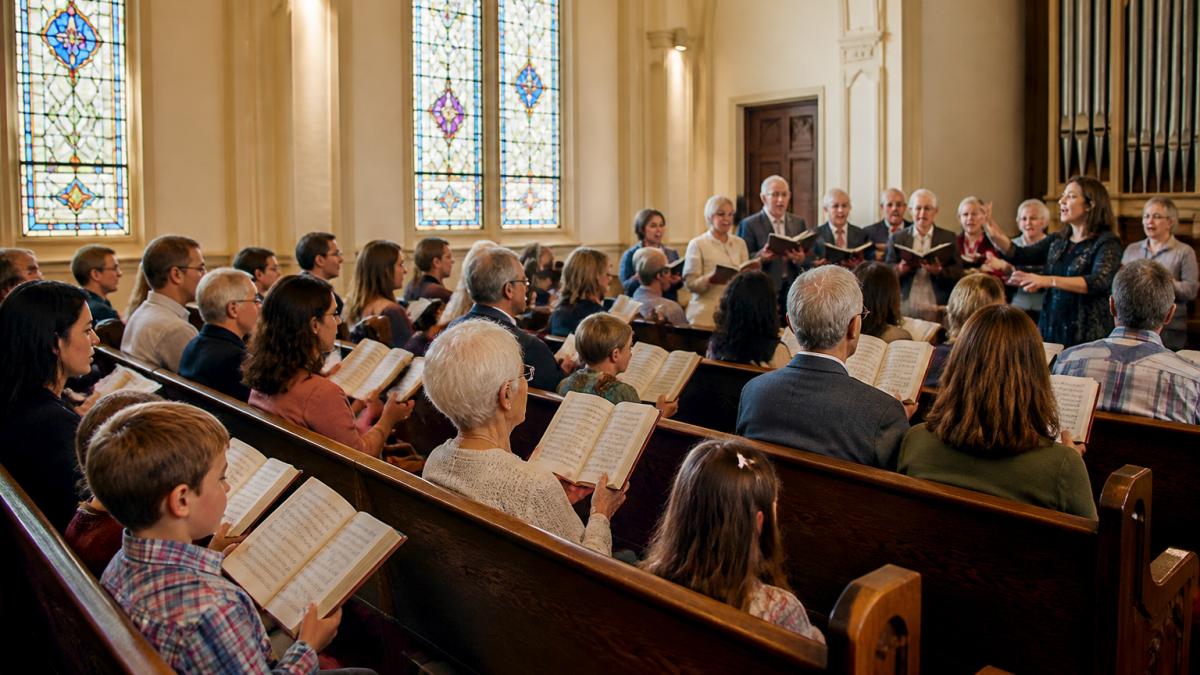
Here is a short comparison to help you match a resource to your situation.
| Resource | Audience or tradition | Model | Best for |
|---|---|---|---|
| Worship Ways | UCC, lectionary churches | Liturgies, English and Spanish | Bilingual lectionary worship |
| More Worship Resources | Broad Protestant | Service ideas, prayers, seasonal | Service-by-service planning |
| Worship Resource Center | WELS and like-minded | Training, preaching, hymnal | Leader formation plus hymnal |
| Church of England texts | Anglican | Common Worship, Book of Common Prayer | Text-based liturgical worship |
| Christian Resource Institute | Ecumenical | Free access | Small-church budgets |
| Faithelement | Lectionary churches | One-time purchase, Years A, B, C | Predictable budgeting |
| Christian Worship | Lutheran | Agenda, Propers commentaries | Careful Propers-based planning |
A common mistake is choosing a resource for its content alone and ignoring the people who will use it.
Practical ideas for every age and ability
For the youngest singers: Children learn by imitation and repetition.
For teenagers and young adults: They often want to participate but may not know the traditional repertoire.
For older adults: Large-print bulletins, good lighting, and a song leader who articulates clearly make a real difference.
For people with disabilities: Provide lyrics in multiple formats, large print, projected text, and audio recordings.
For multi-generational and bilingual congregations: Mix hymns from different eras and traditions.
A simple seasonal singing plan
One of the most practical things a worship leader can do is build a year-round singing calendar that connects the church year, the lectionary, and the congregation's abilities. Here is a simple framework:
- Advent and Christmas: Choose three to four hymns the congregation will sing repeatedly. Teach them in November so they are familiar by December. Include a children's hymn and a bilingual stanza where possible.
- Lent and Easter: Focus on hymns that tell the story of the season. Many traditional churches find a cappella singing during Holy Week draws the congregation in more deeply. Plan one service where the congregation sings the entire liturgy.
- Ordinary Time: This is the season for teaching new hymns. Introduce one unfamiliar hymn per month, pairing it with a familiar one, and use the lectionary readings to choose hymns that connect to the day's Scripture.
- Special services: For baptisms, weddings, funerals, and community events, keep a short list of hymns the congregation knows well. These are the moments when participation matters most.
This is where our book, Let Her Sing!, takes a different angle from a song library. It is a call to build a program with a wide-open door, where each person's music has a place, and where leaders serve the congregation rather than the stage. You can show me what that looks like in practice.
Building a Foundation That Lasts
A worship program is built on foundations, not on individual Sundays. Choose resources your team can sustain across the church calendar, then train the people who will carry them.
Watch out: buying a subscription your volunteers cannot maintain is the fastest way to waste a budget. Match the tool to your staffing, not to your ambitions. The right resource for your church is the one your people can actually use.
Resource selection by church size, budget, and staffing
Small congregations (under 100 members): You likely have a volunteer song leader, a pianist, and a pastor who wears many hats. Your best resources are free or low-cost, easy to learn, and flexible.
Mid-sized congregations (100-300 members): You may have a part-time or full-time music director and a small team of volunteers.
Large congregations (300+ members): You likely have a staff team and multiple music ensembles.
The stewardship question
Responsible stewardship means more than watching the budget. It means asking whether a resource helps your congregation pray and sing together, or whether it merely decorates a service.
Before you commit to any resource, ask three questions:
- Does it align with our tradition and our pastor's theology? A resource that fights your tradition will create friction every week.
- Can our volunteers actually use it? If it requires training your team does not have, it will sit on a shelf.
- Does it help more voices join in? The test of any resource is participation, not polish.
A checklist for getting there
- Confirm lectionary alignment with your pastor
- Check reprint and licensing terms before printing
- Test readability with your oldest member
- Assign one person to catalog borrowed material
If you are introducing hymnal-supported material to a congregation that resists change, our guide on overcoming resistance to worship change will help you lead with patience rather than pressure.
Frequently Asked Questions
What worship resources are useful for traditional churches?
Traditional churches benefit from resources that support lectionary-based liturgy, service orders, prayers, and hymns. Options include Worship Ways for bilingual liturgies, More Worship Resources for seasonal material, the Church of England's Common Worship and Book of Common Prayer texts, and hymnal-supported programs like Christian Worship. Evaluate each resource for lectionary alignment, language coverage, and whether it fits your congregation's musical and theological tradition before committing.
How can a traditional church make worship more inclusive?
Inclusive worship planning starts with asking who is not currently participating. Offer large-print bulletins, ensure lyrics are projected clearly, include bilingual elements where your community needs them, and choose congregational singing ideas that use simple, repeated refrains. Involve people with disabilities in planning conversations rather than assuming their needs. The goal is a wide-open door where every voice has a place, not perfect music.
What music works well in a traditional church service?
Hymns remain the backbone of traditional worship, especially when the congregation knows them well. Pair familiar hymns with sung responses, psalm settings, and simple refrains that children and visitors can pick up quickly. Church choir resources should support congregational singing rather than replace it. Choose musical selections that match the liturgical season and lectionary readings, and rotate new material slowly so the congregation is not overwhelmed.
How can a church choir support congregational worship?
A choir serves the congregation best when it leads rather than performs. Position singers to face the congregation, choose anthems that introduce or reinforce hymns, and occasionally invite the congregation to sing with the choir on a familiar refrain. Church choir resources that emphasize service over performance help keep the focus on collective musical engagement. The choir's role is to encourage every voice, not to showcase a select few.
How can worship leaders balance musical quality with participation?
Worship leader resources should prioritize participation over polish. A congregation singing heartily with modest accompaniment often reflects more faithful worship than a flawless performance by a few. Choose keys that sit comfortably for untrained voices, keep tempos singable, and resist the urge to fill every moment with complex arrangements. Responsible stewardship means preparing well and then letting go, trusting the community to sing.
The hardest part of worship planning is not finding resources. It is letting go of the need for perfect music and trusting the people in front of you. At Let Her Sing!, we built our work around that shift: community-based worship, inclusive congregational singing, and leadership that serves every voice rather than a chosen few. Get started with Let Her Sing! and give every member of your congregation a place in the song.